Filter by
Found 1 from your keywords: author="Ahmed, Siraj"
# Debug Box
/var/www/htdocs/pustaka-digital/lib/SearchEngine/SearchBiblioEngine.php:688 "Search Engine Debug 🔎 🪲"
Engine Type ⚙️: "SLiMS\SearchEngine\SearchBiblioEngine"
SQL ⚙️: array:2 [
  "count" => "select count(sb.biblio_id) from search_biblio as sb where sb.opac_hide=0 and ((match (sb.author) against (:author in boolean mode)))"
  "query" => "select sb.biblio_id, sb.title, sb.author, sb.topic, sb.image, sb.isbn_issn, sb.publisher, sb.publish_place, sb.publish_year, sb.labels, sb.input_date, sb.edition, sb.collation, sb.series_title, sb.call_number from search_biblio as sb where sb.opac_hide=0 and ((match (sb.author) against (:author in boolean mode))) order by sb.last_update desc limit 10 offset 0"
]
Bind Value ⚒️: array:1 [
  ":author" => "'+\"Ahmed, Siraj\"'"
]
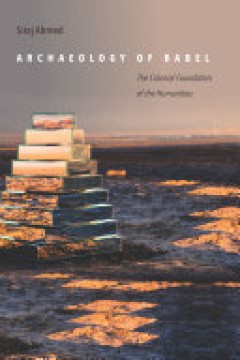
Archaeology of Babel: The Colonial Foundation of the Humanities
For more than three decades, preeminent scholars in comparative literature and postcolonial studies have called for a return to philology as the indispensable basis of critical method in the humanities. Against such calls, this book argues that the privilege philology has always enjoyed within the modern humanities silently reinforces a colonial hierarchy. In fact, each of philology's foundatio…
- Edition
- -
- ISBN/ISSN
- 9781503604049
- Collation
- 281 p
- Series Title
- -
- Call Number
- 407 SIR a
 Computer Science, Information & General Works
  Philosophy & Psychology
  Religion
  Social Sciences
  Language
  Pure Science
  Applied Sciences
  Art & Recreation
  Literature
  History & Geography