Filter by
Found 1 from your keywords: author="Bozsahin, Cem"
# Debug Box
/var/www/htdocs/pustaka-digital/lib/SearchEngine/SearchBiblioEngine.php:688 "Search Engine Debug 🔎 🪲"
Engine Type ⚙️: "SLiMS\SearchEngine\SearchBiblioEngine"
SQL ⚙️: array:2 [
  "count" => "select count(sb.biblio_id) from search_biblio as sb where sb.opac_hide=0 and ((match (sb.author) against (:author in boolean mode)))"
  "query" => "select sb.biblio_id, sb.title, sb.author, sb.topic, sb.image, sb.isbn_issn, sb.publisher, sb.publish_place, sb.publish_year, sb.labels, sb.input_date, sb.edition, sb.collation, sb.series_title, sb.call_number from search_biblio as sb where sb.opac_hide=0 and ((match (sb.author) against (:author in boolean mode))) order by sb.last_update desc limit 10 offset 0"
]
Bind Value ⚒️: array:1 [
  ":author" => "'+\"Bozsahin, Cem\"'"
]
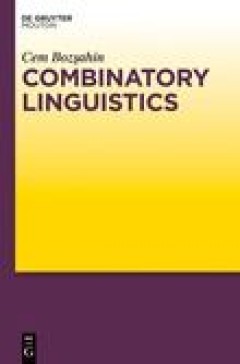
Combinatory linguistics
The book examines to what extent the mediating relation between constituents and their semantics can arise from combinatory knowledge of words. It traces the roots of Combinatory Categorial Grammar, and uses the theory to promote a Humean question in linguistics and cognitive science: Why do we see limited constituency and dependency in natural languages, despite their diversity and potential i…
- Edition
- -
- ISBN/ISSN
- 9783110296877 9
- Collation
- 298 p.; 23 cm.
- Series Title
- -
- Call Number
- 410 BOZ c
 Computer Science, Information & General Works
  Philosophy & Psychology
  Religion
  Social Sciences
  Language
  Pure Science
  Applied Sciences
  Art & Recreation
  Literature
  History & Geography