Filter by
Found 1 from your keywords: author="Dawson, Michael R. W."
# Debug Box
/var/www/htdocs/pustaka-digital/lib/SearchEngine/SearchBiblioEngine.php:688 "Search Engine Debug 🔎 🪲"
Engine Type ⚙️: "SLiMS\SearchEngine\SearchBiblioEngine"
SQL ⚙️: array:2 [
  "count" => "select count(sb.biblio_id) from search_biblio as sb where sb.opac_hide=0 and ((match (sb.author) against (:author in boolean mode)))"
  "query" => "select sb.biblio_id, sb.title, sb.author, sb.topic, sb.image, sb.isbn_issn, sb.publisher, sb.publish_place, sb.publish_year, sb.labels, sb.input_date, sb.edition, sb.collation, sb.series_title, sb.call_number from search_biblio as sb where sb.opac_hide=0 and ((match (sb.author) against (:author in boolean mode))) order by sb.last_update desc limit 10 offset 0"
]
Bind Value ⚒️: array:1 [
  ":author" => "'+\"Dawson, Michael R. W.\"'"
]
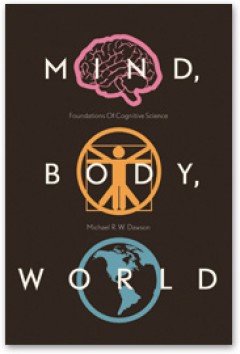
Mind, body, world : foundations of cognitive science
Cognitive science arose in the 1950s when it became apparent that a number of disciplines, including psychology, computer science, linguistics, and philosophy, were fragmenting. Perhaps owing to the fieldÕs immediate origins in cybernetics, as well as to the foundational assumption that cognition is information processing, cognitive science initially seemed more unified than psychology. Howeve…
- Edition
- -
- ISBN/ISSN
- 9781927356180
- Collation
- XV, 490 p.
- Series Title
- OPEL (Open Paths to Enriched Learning)
- Call Number
- 153 DAW m
 Computer Science, Information & General Works
  Philosophy & Psychology
  Religion
  Social Sciences
  Language
  Pure Science
  Applied Sciences
  Art & Recreation
  Literature
  History & Geography