Filter by
Found 1 from your keywords: author="Drasgow, Fritz"
# Debug Box
/var/www/htdocs/pustaka-digital/lib/SearchEngine/SearchBiblioEngine.php:688 "Search Engine Debug 🔎 🪲"
Engine Type ⚙️: "SLiMS\SearchEngine\SearchBiblioEngine"
SQL ⚙️: array:2 [
  "count" => "select count(sb.biblio_id) from search_biblio as sb where sb.opac_hide=0 and ((match (sb.author) against (:author in boolean mode)))"
  "query" => "select sb.biblio_id, sb.title, sb.author, sb.topic, sb.image, sb.isbn_issn, sb.publisher, sb.publish_place, sb.publish_year, sb.labels, sb.input_date, sb.edition, sb.collation, sb.series_title, sb.call_number from search_biblio as sb where sb.opac_hide=0 and ((match (sb.author) against (:author in boolean mode))) order by sb.last_update desc limit 10 offset 0"
]
Bind Value ⚒️: array:1 [
  ":author" => "'+\"Drasgow, Fritz\"'"
]
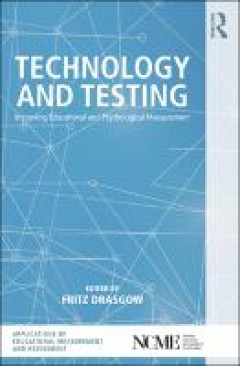
Technology and testing : improving educational and psychological measurement
From early answer sheets filled in with number 2 pencils, to tests administered by mainframe computers, to assessments wholly constructed by computers, it is clear that technology is changing the field of educational and psychological measurement. The numerous and rapid advances have immediate impact on test creators, assessment professionals, and those who implement and analyze assessments. Th…
- Edition
- -
- ISBN/ISSN
- 9781317975892
- Collation
- xix; 376 pg; ill.
- Series Title
- -
- Call Number
- 371.26 DRA d
 Computer Science, Information & General Works
  Philosophy & Psychology
  Religion
  Social Sciences
  Language
  Pure Science
  Applied Sciences
  Art & Recreation
  Literature
  History & Geography