Filter by
Found 1 from your keywords: author="Edwards, Natalie"
# Debug Box
/var/www/htdocs/pustaka-digital/lib/SearchEngine/SearchBiblioEngine.php:688 "Search Engine Debug 🔎 🪲"
Engine Type ⚙️: "SLiMS\SearchEngine\SearchBiblioEngine"
SQL ⚙️: array:2 [
  "count" => "select count(sb.biblio_id) from search_biblio as sb where sb.opac_hide=0 and ((match (sb.author) against (:author in boolean mode)))"
  "query" => "select sb.biblio_id, sb.title, sb.author, sb.topic, sb.image, sb.isbn_issn, sb.publisher, sb.publish_place, sb.publish_year, sb.labels, sb.input_date, sb.edition, sb.collation, sb.series_title, sb.call_number from search_biblio as sb where sb.opac_hide=0 and ((match (sb.author) against (:author in boolean mode))) order by sb.last_update desc limit 10 offset 0"
]
Bind Value ⚒️: array:1 [
  ":author" => "'+\"Edwards, Natalie\"'"
]
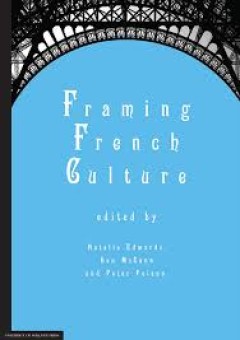
Framing French culture
Throughout this book, the concept of framing is used to look at art, photography, scientific drawings and cinema as visually constituted, spatially bounded productions. The way these genres relate to that which exists beyond the frame, by means of plastic, chemically transposed, pencil-sketched or moving images allows us to decipher the particular language of the visual and at the same time cir…
- Edition
- -
- ISBN/ISSN
- 9781922064875
- Collation
- 1 online resource (vi, 290 pages)
- Series Title
- -
- Call Number
- 840.93244 EDW f
 Computer Science, Information & General Works
  Philosophy & Psychology
  Religion
  Social Sciences
  Language
  Pure Science
  Applied Sciences
  Art & Recreation
  Literature
  History & Geography