Filter by
Found 1 from your keywords: author="Gao Timothy"
# Debug Box
/var/www/htdocs/pustaka-digital/lib/SearchEngine/SearchBiblioEngine.php:688 "Search Engine Debug 🔎 🪲"
Engine Type ⚙️: "SLiMS\SearchEngine\SearchBiblioEngine"
SQL ⚙️: array:2 [
  "count" => "select count(sb.biblio_id) from search_biblio as sb where sb.opac_hide=0 and ((match (sb.author) against (:author in boolean mode)))"
  "query" => "select sb.biblio_id, sb.title, sb.author, sb.topic, sb.image, sb.isbn_issn, sb.publisher, sb.publish_place, sb.publish_year, sb.labels, sb.input_date, sb.edition, sb.collation, sb.series_title, sb.call_number from search_biblio as sb where sb.opac_hide=0 and ((match (sb.author) against (:author in boolean mode))) order by sb.last_update desc limit 10 offset 0"
]
Bind Value ⚒️: array:1 [
  ":author" => "'+\"Gao Timothy\"'"
]
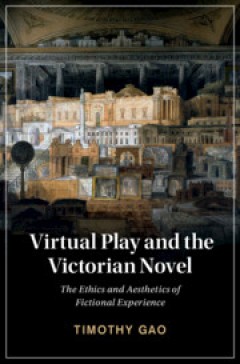
Virtual play and the victorian novel : the ethics and aesthetics of fictional…
Pondering the town he had invented in his novels, Anthony Trollope had 'so realised the place, and the people, and the facts' of Barset that 'the pavement of the city ways are familiar to my footsteps'. After his novels end, William Thackeray wonders where his characters now live, and misses their conversation. How can we understand the novel as a form of artificial reality? Timothy Gao propose…
- Edition
- -
- ISBN/ISSN
- 9781108938518
- Collation
- vi, 238 p. ; ill
- Series Title
- -
- Call Number
- 823.809357 GAO v
 Computer Science, Information & General Works
  Philosophy & Psychology
  Religion
  Social Sciences
  Language
  Pure Science
  Applied Sciences
  Art & Recreation
  Literature
  History & Geography