Filter by
Found 1 from your keywords: author="Horatschek, Anna Marga...
# Debug Box
/var/www/htdocs/pustaka-digital/lib/SearchEngine/SearchBiblioEngine.php:688 "Search Engine Debug 🔎 🪲"
Engine Type ⚙️: "SLiMS\SearchEngine\SearchBiblioEngine"
SQL ⚙️: array:2 [
  "count" => "select count(sb.biblio_id) from search_biblio as sb where sb.opac_hide=0 and ((match (sb.author) against (:author in boolean mode)))"
  "query" => "select sb.biblio_id, sb.title, sb.author, sb.topic, sb.image, sb.isbn_issn, sb.publisher, sb.publish_place, sb.publish_year, sb.labels, sb.input_date, sb.edition, sb.collation, sb.series_title, sb.call_number from search_biblio as sb where sb.opac_hide=0 and ((match (sb.author) against (:author in boolean mode))) order by sb.last_update desc limit 10 offset 0"
]
Bind Value ⚒️: array:1 [
  ":author" => "'+\"Horatschek, Anna Margaretha\"'"
]
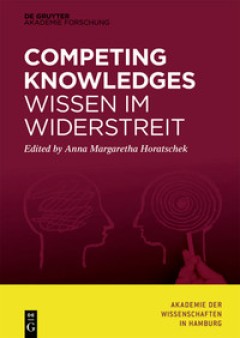
Competing knowledges – wissen im widerstreit
Whatever societies accept as ‘knowledge’ is embedded in epistemological, institutional, political, and economic power relations. How is knowledge produced under such circumstances? What is the difference between general knowledge and the sciences? Can there be science without universal truth claims? Questions like these are discussed in eleven essays from the perspective of Sociology, Law, …
- Edition
- -
- ISBN/ISSN
- 9783110659658
- Collation
- X, 220 p.
- Series Title
- Abhandlungen der Akademie der Wissenschaften in Hamburg, 9
- Call Number
- 121 COM c
 Computer Science, Information & General Works
  Philosophy & Psychology
  Religion
  Social Sciences
  Language
  Pure Science
  Applied Sciences
  Art & Recreation
  Literature
  History & Geography