Filter by
Found 1 from your keywords: author="Jones, Ben"
# Debug Box
/var/www/htdocs/pustaka-digital/lib/SearchEngine/SearchBiblioEngine.php:688 "Search Engine Debug 🔎 🪲"
Engine Type ⚙️: "SLiMS\SearchEngine\SearchBiblioEngine"
SQL ⚙️: array:2 [
  "count" => "select count(sb.biblio_id) from search_biblio as sb where sb.opac_hide=0 and ((match (sb.author) against (:author in boolean mode)))"
  "query" => "select sb.biblio_id, sb.title, sb.author, sb.topic, sb.image, sb.isbn_issn, sb.publisher, sb.publish_place, sb.publish_year, sb.labels, sb.input_date, sb.edition, sb.collation, sb.series_title, sb.call_number from search_biblio as sb where sb.opac_hide=0 and ((match (sb.author) against (:author in boolean mode))) order by sb.last_update desc limit 10 offset 0"
]
Bind Value ⚒️: array:1 [
  ":author" => "'+\"Jones, Ben\"'"
]
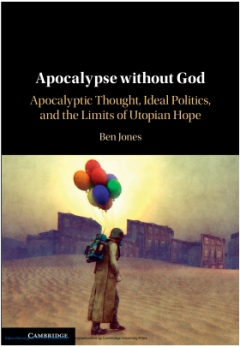
Apocalypse without God : Apocalyptic Thought, Ideal Politics, and the Limits …
Apocalypse, it seems, is everywhere. Preachers with vast followings proclaim the world's end. Apocalyptic fears grip even the nonreligious amid climate change, pandemics, and threats of nuclear war. As these ideas pervade popular discourse, grasping their logic remains elusive. Ben Jones argues that we can gain insight into apocalyptic thought through secular thinkers. He starts with a puzzle: …
- Edition
- -
- ISBN/ISSN
- 9781009037037
- Collation
- xii, 242p,: ill
- Series Title
- -
- Call Number
- 321.07 BEN
 Computer Science, Information & General Works
  Philosophy & Psychology
  Religion
  Social Sciences
  Language
  Pure Science
  Applied Sciences
  Art & Recreation
  Literature
  History & Geography