Filter by
Found 1 from your keywords: author="Mößner, Nicola"
# Debug Box
/var/www/htdocs/pustaka-digital/lib/SearchEngine/SearchBiblioEngine.php:688 "Search Engine Debug 🔎 🪲"
Engine Type ⚙️: "SLiMS\SearchEngine\SearchBiblioEngine"
SQL ⚙️: array:2 [
  "count" => "select count(sb.biblio_id) from search_biblio as sb where sb.opac_hide=0 and ((match (sb.author) against (:author in boolean mode)))"
  "query" => "select sb.biblio_id, sb.title, sb.author, sb.topic, sb.image, sb.isbn_issn, sb.publisher, sb.publish_place, sb.publish_year, sb.labels, sb.input_date, sb.edition, sb.collation, sb.series_title, sb.call_number from search_biblio as sb where sb.opac_hide=0 and ((match (sb.author) against (:author in boolean mode))) order by sb.last_update desc limit 10 offset 0"
]
Bind Value ⚒️: array:1 [
  ":author" => "'+\"Mößner, Nicola\"'"
]
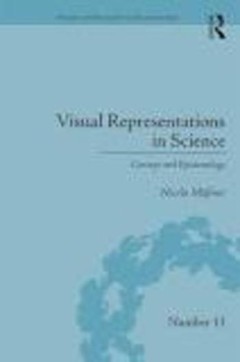
Visual representations in science : concept and epistemology
Visual representations (photographs, diagrams, etc.) play crucial roles in scientific processes. They help, for example, to communicate research results and hypotheses to scientific peers as well as to the lay audience. In genuine research activities they are used as evidence or as surrogates for research objects which are otherwise cognitively inaccessible. Despite their important functional r…
- Edition
- -
- ISBN/ISSN
- 9781138089938
- Collation
- 372 p.; 22 cm.
- Series Title
- -
- Call Number
- 121 MOB v
 Computer Science, Information & General Works
  Philosophy & Psychology
  Religion
  Social Sciences
  Language
  Pure Science
  Applied Sciences
  Art & Recreation
  Literature
  History & Geography