Filter by
Found 1 from your keywords: author="Mehlenbacher, Ashley"
# Debug Box
/var/www/htdocs/pustaka-digital/lib/SearchEngine/SearchBiblioEngine.php:688 "Search Engine Debug 🔎 🪲"
Engine Type ⚙️: "SLiMS\SearchEngine\SearchBiblioEngine"
SQL ⚙️: array:2 [
  "count" => "select count(sb.biblio_id) from search_biblio as sb where sb.opac_hide=0 and ((match (sb.author) against (:author in boolean mode)))"
  "query" => "select sb.biblio_id, sb.title, sb.author, sb.topic, sb.image, sb.isbn_issn, sb.publisher, sb.publish_place, sb.publish_year, sb.labels, sb.input_date, sb.edition, sb.collation, sb.series_title, sb.call_number from search_biblio as sb where sb.opac_hide=0 and ((match (sb.author) against (:author in boolean mode))) order by sb.last_update desc limit 10 offset 0"
]
Bind Value ⚒️: array:1 [
  ":author" => "'+\"Mehlenbacher, Ashley\"'"
]
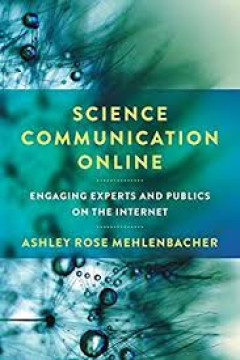
Science Communication Online
As science communication has moved online, a range of important new genres have emerged: crowdfunding proposals, blogs, microblogs, databases, and more. Rhetorics of Science Online takes up these genres to explore how scientists are adapting their communications, how publics are increasingly involved in science, and how boundaries between experts and non-experts continue to erode.
- Edition
- -
- ISBN/ISSN
- 9780814213988
- Collation
- XIII, 175 p.
- Series Title
- -
- Call Number
- 302.23 MEH s
 Computer Science, Information & General Works
  Philosophy & Psychology
  Religion
  Social Sciences
  Language
  Pure Science
  Applied Sciences
  Art & Recreation
  Literature
  History & Geography