Filter by
Found 1 from your keywords: author="Moisio, Sami"
# Debug Box
/var/www/htdocs/pustaka-digital/lib/SearchEngine/SearchBiblioEngine.php:688 "Search Engine Debug 🔎 🪲"
Engine Type ⚙️: "SLiMS\SearchEngine\SearchBiblioEngine"
SQL ⚙️: array:2 [
  "count" => "select count(sb.biblio_id) from search_biblio as sb where sb.opac_hide=0 and ((match (sb.author) against (:author in boolean mode)))"
  "query" => "select sb.biblio_id, sb.title, sb.author, sb.topic, sb.image, sb.isbn_issn, sb.publisher, sb.publish_place, sb.publish_year, sb.labels, sb.input_date, sb.edition, sb.collation, sb.series_title, sb.call_number from search_biblio as sb where sb.opac_hide=0 and ((match (sb.author) against (:author in boolean mode))) order by sb.last_update desc limit 10 offset 0"
]
Bind Value ⚒️: array:1 [
  ":author" => "'+\"Moisio, Sami\"'"
]
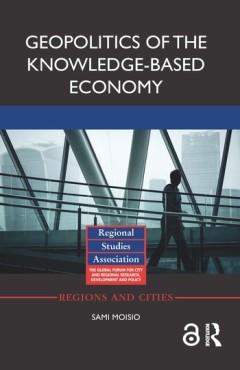
Geopolitics of the knowledge-based society
We live in the era of the knowledge-based economy, and this has major implications for the ways in which states, cities and even supranational political units are spatially planned, governed and developed. In this book, Sami Moisio delves deeply into the links between the knowledge-based economy and geopolitics, examining a wide range of themes, including city geopolitics and the university as …
- Edition
- -
- ISBN/ISSN
- 9781138821996
- Collation
- xi, 182p. : ill.
- Series Title
- -
- Call Number
- 303.4833 MOI g
 Computer Science, Information & General Works
  Philosophy & Psychology
  Religion
  Social Sciences
  Language
  Pure Science
  Applied Sciences
  Art & Recreation
  Literature
  History & Geography