Filter by
Found 1 from your keywords: author="Nyirubugara, Olivier"
# Debug Box
/var/www/htdocs/pustaka-digital/lib/SearchEngine/SearchBiblioEngine.php:688 "Search Engine Debug 🔎 🪲"
Engine Type ⚙️: "SLiMS\SearchEngine\SearchBiblioEngine"
SQL ⚙️: array:2 [
  "count" => "select count(sb.biblio_id) from search_biblio as sb where sb.opac_hide=0 and ((match (sb.author) against (:author in boolean mode)))"
  "query" => "select sb.biblio_id, sb.title, sb.author, sb.topic, sb.image, sb.isbn_issn, sb.publisher, sb.publish_place, sb.publish_year, sb.labels, sb.input_date, sb.edition, sb.collation, sb.series_title, sb.call_number from search_biblio as sb where sb.opac_hide=0 and ((match (sb.author) against (:author in boolean mode))) order by sb.last_update desc limit 10 offset 0"
]
Bind Value ⚒️: array:1 [
  ":author" => "'+\"Nyirubugara, Olivier\"'"
]
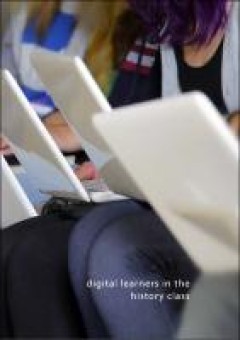
Surfing the past
This book discusses one of the most frequently discussed subjects in history education during the last two decades, namely how secondary school pupils use the World Wide Web for their learning activities. Based on two case studies in two Dutch schools, the book shows some ways in which the use of the Web has changed history education in at least three respects: first, the findings of the two ca…
- Edition
- -
- ISBN/ISSN
- 9789088900815
- Collation
- 279 p. : color, ill.
- Series Title
- -
- Call Number
- 907.12 NYI s
 Computer Science, Information & General Works
  Philosophy & Psychology
  Religion
  Social Sciences
  Language
  Pure Science
  Applied Sciences
  Art & Recreation
  Literature
  History & Geography