Filter by
Found 1 from your keywords: author="Peil, Tiina"
# Debug Box
/var/www/htdocs/pustaka-digital/lib/SearchEngine/SearchBiblioEngine.php:688 "Search Engine Debug 🔎 🪲"
Engine Type ⚙️: "SLiMS\SearchEngine\SearchBiblioEngine"
SQL ⚙️: array:2 [
  "count" => "select count(sb.biblio_id) from search_biblio as sb where sb.opac_hide=0 and ((match (sb.author) against (:author in boolean mode)))"
  "query" => "select sb.biblio_id, sb.title, sb.author, sb.topic, sb.image, sb.isbn_issn, sb.publisher, sb.publish_place, sb.publish_year, sb.labels, sb.input_date, sb.edition, sb.collation, sb.series_title, sb.call_number from search_biblio as sb where sb.opac_hide=0 and ((match (sb.author) against (:author in boolean mode))) order by sb.last_update desc limit 10 offset 0"
]
Bind Value ⚒️: array:1 [
  ":author" => "'+\"Peil, Tiina\"'"
]
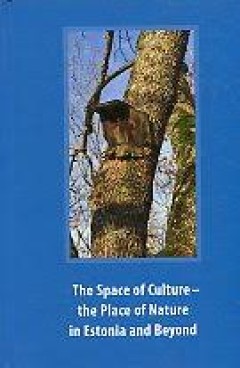
The space of culture: the place of nature in Estonia and beyond
This volume sets out to construct a tentative bridge between the physical and perceived (academic) worlds, between the understandings of culture and nature, their spatiality and temporality by tackling the spatiality of culture phenomena across disciplinary boundaries. The contributions are arranged around a general question of how humans organise the spaces in which they live. The book is divi…
- Edition
- -
- ISBN/ISSN
- 9789949196234
- Collation
- 190 pages : illustrations, maps ; 22 cm.
- Series Title
- Approaches to culture theory series ; v. 1
- Call Number
- 306.094798 SPA s
 Computer Science, Information & General Works
  Philosophy & Psychology
  Religion
  Social Sciences
  Language
  Pure Science
  Applied Sciences
  Art & Recreation
  Literature
  History & Geography