Filter by
Found 1 from your keywords: author="Riskin, Carl"
# Debug Box
/var/www/htdocs/pustaka-digital/lib/SearchEngine/SearchBiblioEngine.php:688 "Search Engine Debug 🔎 🪲"
Engine Type ⚙️: "SLiMS\SearchEngine\SearchBiblioEngine"
SQL ⚙️: array:2 [
  "count" => "select count(sb.biblio_id) from search_biblio as sb where sb.opac_hide=0 and ((match (sb.author) against (:author in boolean mode)))"
  "query" => "select sb.biblio_id, sb.title, sb.author, sb.topic, sb.image, sb.isbn_issn, sb.publisher, sb.publish_place, sb.publish_year, sb.labels, sb.input_date, sb.edition, sb.collation, sb.series_title, sb.call_number from search_biblio as sb where sb.opac_hide=0 and ((match (sb.author) against (:author in boolean mode))) order by sb.last_update desc limit 10 offset 0"
]
Bind Value ⚒️: array:1 [
  ":author" => "'+\"Riskin, Carl\"'"
]
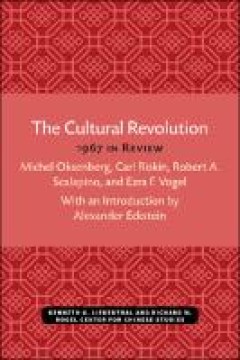
The cultural revolution : 1967 in review
The Chinese Communist system was from its very inception based on an inherent contradiction and tension, and the Cultural Revolution is the latest and most violent manifestation of that contradiction. Built into the very structure of the system was an inner conflict between the desiderata, the imperatives, and the requirements that technocratic modernization on the one hand and Maoist values an…
- Edition
- -
- ISBN/ISSN
- 9780472902125
- Collation
- V, 125
- Series Title
- Michigan Monographs In Chinese Studies, 2
- Call Number
- 306 CUL c
 Computer Science, Information & General Works
  Philosophy & Psychology
  Religion
  Social Sciences
  Language
  Pure Science
  Applied Sciences
  Art & Recreation
  Literature
  History & Geography