Filter by
Found 1 from your keywords: author="Stavru, Alessandro"
# Debug Box
/var/www/htdocs/pustaka-digital/lib/SearchEngine/SearchBiblioEngine.php:688 "Search Engine Debug 🔎 🪲"
Engine Type ⚙️: "SLiMS\SearchEngine\SearchBiblioEngine"
SQL ⚙️: array:2 [
  "count" => "select count(sb.biblio_id) from search_biblio as sb where sb.opac_hide=0 and ((match (sb.author) against (:author in boolean mode)))"
  "query" => "select sb.biblio_id, sb.title, sb.author, sb.topic, sb.image, sb.isbn_issn, sb.publisher, sb.publish_place, sb.publish_year, sb.labels, sb.input_date, sb.edition, sb.collation, sb.series_title, sb.call_number from search_biblio as sb where sb.opac_hide=0 and ((match (sb.author) against (:author in boolean mode))) order by sb.last_update desc limit 10 offset 0"
]
Bind Value ⚒️: array:1 [
  ":author" => "'+\"Stavru, Alessandro\"'"
]
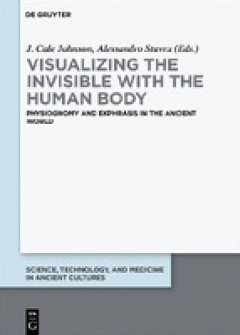
Visualizing the invisible with the human body : physiognomy and ekphrasis in …
Physiognomy and ekphrasis are two of the most important modes of description in antiquity and represent the necessary precursors of scientific description. The primary way of divining the characteristics and fate of an individual, whether inborn or acquired, was to observe the patient’s external characteristics and behaviour. This volume focuses initially on two types of descriptive literatur…
- Edition
- -
- ISBN/ISSN
- 9783110642698
- Collation
- VI, 501 p.
- Series Title
- Science, Technology, and Medicine in Ancient Cultures
- Call Number
- 480 JOH v
 Computer Science, Information & General Works
  Philosophy & Psychology
  Religion
  Social Sciences
  Language
  Pure Science
  Applied Sciences
  Art & Recreation
  Literature
  History & Geography