Filter by
# Debug Box
/var/www/htdocs/pustaka-digital/lib/SearchEngine/SearchBiblioEngine.php:688 "Search Engine Debug 🔎 🪲"
Engine Type ⚙️: "SLiMS\SearchEngine\SearchBiblioEngine"
SQL ⚙️: array:2 [
  "count" => "select count(sb.biblio_id) from search_biblio as sb where sb.opac_hide=0 and ((match (sb.author) against (:author in boolean mode)))"
  "query" => "select sb.biblio_id, sb.title, sb.author, sb.topic, sb.image, sb.isbn_issn, sb.publisher, sb.publish_place, sb.publish_year, sb.labels, sb.input_date, sb.edition, sb.collation, sb.series_title, sb.call_number from search_biblio as sb where sb.opac_hide=0 and ((match (sb.author) against (:author in boolean mode))) order by sb.last_update desc limit 10 offset 10"
]
Bind Value ⚒️: array:1 [
  ":author" => "'+Clark, Geoffrey R. (Geoffrey Richard)'"
]

Resilience, Adaptive Peacebuilding and Transitional Justice How Societies Re…
Processes of post-war reconstruction, peacebuilding and reconciliation are partly about fostering stability and adaptive capacity across different social systems. Nevertheless, these processes have seldom been expressly discussed within a resilience framework. Similarly, although the goals of transitional justice – among them (re)establishing the rule of law, delivering justice and aiding rec…
- Edition
- -
- ISBN/ISSN
- 9781108919500
- Collation
- xvii, 310 p ; ill
- Series Title
- -
- Call Number
- 155.232 RES J

Multiculturalism in the british commonwealth : comparative perspectives on th…
Cultural diversity raises pressing issues for both political theory and practice. The remaking of the world since 1945 has led to increased demographic diversity within many states, and greater acknowledgment of its worth. “Multiculturalism” refers to the political, legal and philosophical strategies which emerged to accommodate this newfound social diversity, and the accompanying public de…
- Edition
- edision 18
- ISBN/ISSN
- 9780520299320
- Collation
- xi. :315 p. ;ill.
- Series Title
- -
- Call Number
- 305.8009712410905. MUL m

Housing and social transition in Japan
edited by Yosuke Hirayama and Richard Ronald.
- Edition
- -
- ISBN/ISSN
- 0415383617 (hbk)
- Collation
- xi, 216 p. ; 25 cm.
- Series Title
- Housing and society series
- Call Number
- 333.3380952 HOU h
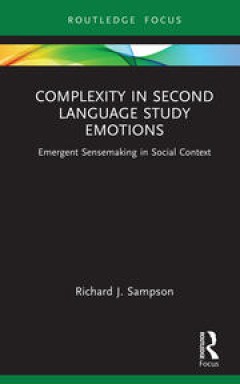
Complexity in second language study emotions
This book offers a socially situated view of the emergence of emotionality for additional language (L2) learners in classroom interaction in Japan. Grounded in a complexity perspective, the author argues that emotions need to be studied as they are dynamically experienced and understood in all of their multidimensional colors by individuals (in interaction). Via practitioner research, Sampso…
- Edition
- first
- ISBN/ISSN
- 9781003306955
- Collation
- vii, 133 p.: ill
- Series Title
- -
- Call Number
- -
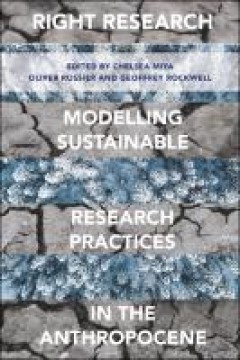
Right research : modelling sustainable research practices in the anthropocene
"Educational institutions play an instrumental role in social and political change, and are responsible for the environmental and social ethics of their institutional practices. The essays in this volume critically examine scholarly research practices in the age of the Anthropocene, and ask what accountability educators and researchers have in ‘righting’ their relationship to the environmen…
- Edition
- -
- ISBN/ISSN
- 9781783749638
- Collation
- xxv, 558 p. : ill.
- Series Title
- -
- Call Number
- 304.2 MIY r
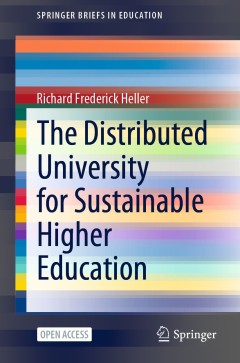
The distributed university for sustainable higher education
This book is open access and discusses the re-imagining of the higher education sector. It exposes problems that relate to the way that universities have become over-managed business enterprises which may not reflect societal, national, or global educational needs. From there, it proposes some solutions, including three innovative programs, that make universities more responsive to needs, as we…
- Edition
- 1
- ISBN/ISSN
- 9789811665066
- Collation
- xii, 80 p. : ill.
- Series Title
- SpringerBriefs in Education
- Call Number
- -

A global history of execution and the criminal corpse
Through studies of beheaded Irish traitors, smugglers hung in chains on the English coast, suicides subjected to the surgeon's knife in Dresden and the burial of executed Nazi war criminals, this volume provides a fresh perspective on the history of capital punishment. This book has two open access chapters under a CC BY license.
- Edition
- -
- ISBN/ISSN
- 9781137443991
- Collation
- 313 p.
- Series Title
- -
- Call Number
- 364.6609 RIC a

Museum activism
Only a decade ago, the notion that museums, galleries and heritage organisations might engage in activist practice, with explicit intent to act upon inequalities, injustices and environmental crises, was met with scepticism and often derision. Seeking to purposefully bring about social change was viewed by many within and beyond the museum community as inappropriately political and antithetical…
- Edition
- 13
- ISBN/ISSN
- 9781351251044
- Collation
- xxix, 406 p. : ill.
- Series Title
- -
- Call Number
- 069 JAN m

Economics without borders : economic research for European policy challenges
If treated as a single economy, the European Union is the largest in the world, with an estimated GDP of over 14 trillion euros. Despite its size, European economic policy has often lagged behind the rest of the world in its ability to generate growth and innovation. Much of the European economic research itself often trails behind that of the USA, which sets much of the agenda in mainstream ec…
- Edition
- -
- ISBN/ISSN
- 9781316636398
- Collation
- xxvi, 666 p. ; ill
- Series Title
- -
- Call Number
- 330.94 BLU e

The DARPA model for transformative technologies: perspectives on the U.S. def…
The U.S. Defense Advanced Research Projects Agency (DARPA) has played a remarkable role in the creation new transformative technologies, revolutionizing defense with drones and precision-guided munitions, and transforming civilian life with portable GPS receivers, voice-recognition software, self-driving cars, unmanned aerial vehicles, and, most famously, the ARPANET and its successor, the Inte…
- Edition
- -
- ISBN/ISSN
- 9781783747931
- Collation
- xix, 485 p. : ind. ; 24 cm
- Series Title
- -
- Call Number
- 338.064 DAR d
 Computer Science, Information & General Works
  Philosophy & Psychology
  Religion
  Social Sciences
  Language
  Pure Science
  Applied Sciences
  Art & Recreation
  Literature
  History & Geography