Filter by
# Debug Box
/var/www/htdocs/pustaka-digital/lib/SearchEngine/SearchBiblioEngine.php:688 "Search Engine Debug 🔎 🪲"
Engine Type ⚙️: "SLiMS\SearchEngine\SearchBiblioEngine"
SQL ⚙️: array:2 [
  "count" => "select count(sb.biblio_id) from search_biblio as sb where sb.opac_hide=0 and ((match (sb.author) against (:author in boolean mode)))"
  "query" => "select sb.biblio_id, sb.title, sb.author, sb.topic, sb.image, sb.isbn_issn, sb.publisher, sb.publish_place, sb.publish_year, sb.labels, sb.input_date, sb.edition, sb.collation, sb.series_title, sb.call_number from search_biblio as sb where sb.opac_hide=0 and ((match (sb.author) against (:author in boolean mode))) order by sb.last_update desc limit 10 offset 70"
]
Bind Value ⚒️: array:1 [
  ":author" => "'+Martin, Chris'"
]
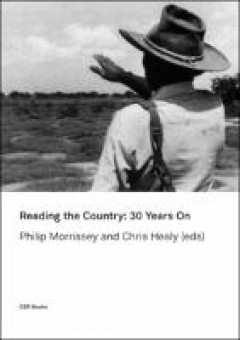
Reading the country: 30 years on
Philip Morrissey and Chris Healy (eds).
- Edition
- -
- ISBN/ISSN
- 9780648124283
- Collation
- 1 online resource (284 pages)
- Series Title
- CSR books
- Call Number
- -

Error-correction coding and decoding : bounds, codes, decoders, analysis and …
This book discusses both the theory and practical applications of self-correcting data, commonly known as error-correcting codes. The applications included demonstrate the importance of these codes in a wide range of everyday technologies, from smartphones to secure communications and transactions. Written in a readily understandable style, the book presents the authors’ twenty-five years of …
- Edition
- -
- ISBN/ISSN
- 9783319511030
- Collation
- xx, 522p. : ill.
- Series Title
- -
- Call Number
- 005.717 ERR e

A history of self-harm in Britain: a genealogy of cutting and overdosing
This book is the first account of self-harming behaviour in its proper historical and political context. The rise of self-cutting and overdosing in the 20th century is linked to the sweeping changes in mental and physical health, and wider political context. The welfare state, social work, Second World War, closure of the asylums, even the legalization of suicide, are all implicated in the prom…
- Edition
- -
- ISBN/ISSN
- 9781137529626
- Collation
- -
- Series Title
- -
- Call Number
- 610.1 MIL a
Time for mapping: cartographic temporalities
"The digital era has brought about huge transformations in the map itself, which to date have been largely conceptualised in spatial terms. Novel objects, forms, processes and approaches have emerged and pose new, pressing questions about the temporality of digital maps and contemporary mapping practices: in spite of its implicit spatiality, digital mapping is strongly grounded in time. This co…
- Edition
- -
- ISBN/ISSN
- 9781526122520
- Collation
- 140p: ill.
- Series Title
- -
- Call Number
- 526 HIN t

One hundred years of chemical warfare: research, deployment, consequences
On April 22, 1915, the German military released 150 tons of chlorine gas at Ypres, Belgium. Carried by a long-awaited wind, the chlorine cloud passed within a few minutes through the British and French trenches, leaving behind at least 1,000 dead and 4,000 injured. This chemical attack, which amounted to the first use of a weapon of mass destruction, marks a turning point in world history. The …
- Edition
- -
- ISBN/ISSN
- 9783319516646
- Collation
- xi, 408p. : ill.
- Series Title
- -
- Call Number
- 355 ONE o

Freshwater microplastics : emerging environmental contaminants?
This volume focuses on microscopic plastic debris, also referred to as microplastics, which have been detected in aquatic environments around the globe and have accordingly raised serious concerns. The book explores whether microplastics represent emerging contaminants in freshwater systems, an area that remains underrepresented to date. Given the complexity of the issue, the book covers the…
- Edition
- -
- ISBN/ISSN
- 9783319616155
- Collation
- xiv, 303p. : ill.
- Series Title
- -
- Call Number
- 628.168 FRE f
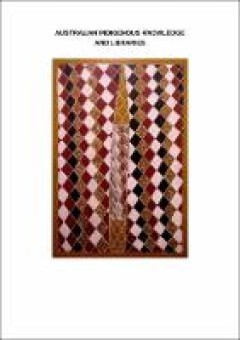
Australian indigenous knowledge and libraries
In response to significant changes in the Indigenous information landscape, the State Library of New South Wales and Jumbunna Indigenous House of Learning at the University of Technology, Sydney, hosted a colloquium, Libraries and Indigenous Knowledge, in December 2004. The two-day colloquium brought together professionals, practitioners and academics to discuss future directions in relation to…
- Edition
- -
- ISBN/ISSN
- 9780980284010
- Collation
- V, 179 p.
- Series Title
- -
- Call Number
- 027.630899915 AUS a

Advancing energy policy : lessons on the integration of social sciences and h…
This open access book advocates for the Social Sciences and Humanities to be more involved in energy policymaking. It forms part of the European platform for energy-related Social Sciences and Humanities’ activities, and works on the premise that crossing disciplines is essential. All of its contributions are highly interdisciplinary, with each chapter grounded in at least three different Soc…
- Edition
- -
- ISBN/ISSN
- 9783319990972
- Collation
- xxvii, 193p. : ill.
- Series Title
- -
- Call Number
- 333.79 ADV a
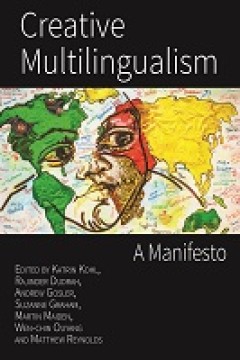
Creative multilingualism: a manifesto
"Multilingualism is integral to the human condition. Hinging on the concept of Creative Multilingualism – the idea that language diversity and creativity are mutually enriching – this timely and thought-provoking volume shows how the concept provides a matrix for experimentation with ideas, approaches and methods. The book presents four years of joint research on Creative Multilingualism co…
- Edition
- -
- ISBN/ISSN
- 9781783749317
- Collation
- ix, 325p.: ill.
- Series Title
- -
- Call Number
- 404.2 CRE c

Managed software evolution
This open access book presents the outcomes of the “Design for Future – Managed Software Evolution” priority program 1593, which was launched by the German Research Foundation (“Deutsche Forschungsgemeinschaft (DFG)”) to develop new approaches to software engineering with a specific focus on long-lived software systems. The different lifecycles of software and hardware platforms lead …
- Edition
- -
- ISBN/ISSN
- 9783030134990
- Collation
- xxii, 426p. : ill.
- Series Title
- -
- Call Number
- 005.1 MAN m
 Computer Science, Information & General Works
  Philosophy & Psychology
  Religion
  Social Sciences
  Language
  Pure Science
  Applied Sciences
  Art & Recreation
  Literature
  History & Geography