Filter by
# Debug Box
/var/www/htdocs/pustaka-digital/lib/SearchEngine/SearchBiblioEngine.php:688 "Search Engine Debug 🔎 🪲"
Engine Type ⚙️: "SLiMS\SearchEngine\SearchBiblioEngine"
SQL ⚙️: array:2 [
  "count" => "select count(sb.biblio_id) from search_biblio as sb where sb.opac_hide=0 and ((match (sb.topic) against (:subject in boolean mode)))"
  "query" => "select sb.biblio_id, sb.title, sb.author, sb.topic, sb.image, sb.isbn_issn, sb.publisher, sb.publish_place, sb.publish_year, sb.labels, sb.input_date, sb.edition, sb.collation, sb.series_title, sb.call_number from search_biblio as sb where sb.opac_hide=0 and ((match (sb.topic) against (:subject in boolean mode))) order by sb.last_update desc limit 10 offset 10"
]
Bind Value ⚒️: array:1 [
  ":subject" => "'+\"body\"'"
]

Brain and human body modeling 2020 : computational human models presented at …
This open access book describes modern applications of computational human modeling in an effort to advance neurology, cancer treatment, and radio-frequency studies including regulatory, safety, and wireless communication fields. Readers working on any application that may expose human subjects to electromagnetic radiation will benefit from this book’s coverage of the latest models and techn…
- Edition
- -
- ISBN/ISSN
- 9783030456238
- Collation
- xi, 407p.: ill.
- Series Title
- -
- Call Number
- 610.28 BRA b

Fluid balance, hydration, and athletic performance
edited by Flavia Meyer, Zbigniew Szygula, Boguslaw Wilk.
- Edition
- -
- ISBN/ISSN
- 9781482223286
- Collation
- xix, 437p.: ill. ; 24 cm
- Series Title
- -
- Call Number
- 612.01522 FLU f
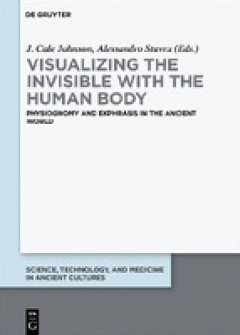
Visualizing the invisible with the human body : physiognomy and ekphrasis in …
Physiognomy and ekphrasis are two of the most important modes of description in antiquity and represent the necessary precursors of scientific description. The primary way of divining the characteristics and fate of an individual, whether inborn or acquired, was to observe the patient’s external characteristics and behaviour. This volume focuses initially on two types of descriptive literatur…
- Edition
- -
- ISBN/ISSN
- 9783110642698
- Collation
- VI, 501 p.
- Series Title
- Science, Technology, and Medicine in Ancient Cultures
- Call Number
- 480 JOH v
 Computer Science, Information & General Works
  Philosophy & Psychology
  Religion
  Social Sciences
  Language
  Pure Science
  Applied Sciences
  Art & Recreation
  Literature
  History & Geography