Filter by
# Debug Box
/var/www/htdocs/pustaka-digital/lib/SearchEngine/SearchBiblioEngine.php:688 "Search Engine Debug 🔎 🪲"
Engine Type ⚙️: "SLiMS\SearchEngine\SearchBiblioEngine"
SQL ⚙️: array:2 [
  "count" => "select count(sb.biblio_id) from search_biblio as sb where sb.opac_hide=0 and ((match (sb.topic) against (:subject in boolean mode)))"
  "query" => "select sb.biblio_id, sb.title, sb.author, sb.topic, sb.image, sb.isbn_issn, sb.publisher, sb.publish_place, sb.publish_year, sb.labels, sb.input_date, sb.edition, sb.collation, sb.series_title, sb.call_number from search_biblio as sb where sb.opac_hide=0 and ((match (sb.topic) against (:subject in boolean mode))) order by sb.last_update desc limit 10 offset 20"
]
Bind Value ⚒️: array:1 [
  ":subject" => "'+\"Australia\"'"
]
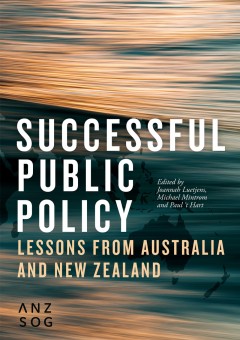
Successful Public Policy: Lessons from Australia and New Zealand
In Australia and New Zealand, many public projects, programs and services perform well. But these cases are consistently underexposed and understudied. We cannot properly ‘see’—let alone recognise and explain—variations in government performance when media, political and academic discourses are saturated with accounts of their shortcomings and failures, but are next to silent on their a…
- Edition
- -
- ISBN/ISSN
- 9781760462796
- Collation
- xix, 529p. : ill.
- Series Title
- -
- Call Number
- 320.994 SUC s

Macassan history and heritage: journeys, encounters and influences
This book presents inter-disciplinary perspectives on the maritime journeys of the Macassan trepangers who sailed in fleets of wooden sailing vessels known as praus from the port city of Makassar in southern Sulawesi to the northern Australian coastline. These voyages date back to at least the 1700s and there is new evidence to suggest that the Macassan praus were visiting northern Australia ev…
- Edition
- -
- ISBN/ISSN
- 9781922144973
- Collation
- vi, 238p. : ill.
- Series Title
- -
- Call Number
- 303.482 CLA m

Multiculturalism and integration: harmonious relationship
Multiculturalism has been the official policy of all Australian governments (Commonwealth and State) since the 1970s. It has recently been criticised, both in Australia and elsewhere. Integration has been suggested as a better term and policy. Critics suggest it is a reversion to assimilation. However integration has not been rigorously defined and may simply be another form of multiculturalism…
- Edition
- -
- ISBN/ISSN
- 9781921862151
- Collation
- xxiii, 228p.: ill.
- Series Title
- -
- Call Number
- 305.8 CLY m
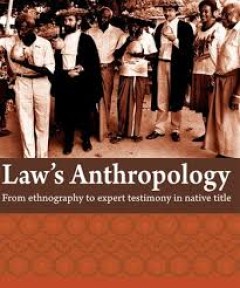
Law's Anthropology
Anthropologists have been appearing as key expert witnesses in native title claims for over 20 years. Until now, however, there has been no theoretically-informed, detailed investigation of how the expert testimony of anthropologists is formed and how it is received by judges. This book examines the structure and habitus of both the field of anthropology and the juridical field and how they hav…
- Edition
- -
- ISBN/ISSN
- 9781921862434
- Collation
- x, 236p.: ill.
- Series Title
- -
- Call Number
- 346.9404320899915 BUR l
Everyday revolutions : remaking gender, sexuality and culture in 1970s Australia
The 1970s was a decade when matters previously considered private and personal became public and political. These shifts not only transformed Australian politics, they engendered far-reaching cultural and social changes. Feminists challenged ‘man-made’ norms and sought to recover lost histories of female achievement and cultural endeavour. They made films, picked up spanners and established…
- Edition
- -
- ISBN/ISSN
- 9781760462970
- Collation
- 336 p.; 22 cm
- Series Title
- -
- Call Number
- 305.420994 EVE e
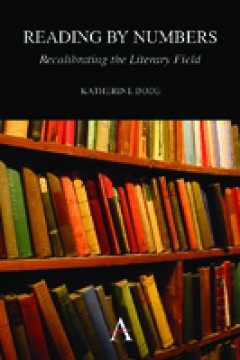
Reading by numbers : recalibrating the literary field
Reading by Numbers: Recalibrating the Literary Field’ is the first book to use digital humanities strategies to integrate the scope and methods of book and publishing history with issues and debates in literary studies. By mining, visualising and modelling data from ‘AustLit’ – an online bibliography of Australian literature that leads the world in its comprehensiveness and scope – th…
- Edition
- -
- ISBN/ISSN
- 9780857284549
- Collation
- ix, 237 p.; 22 cm.
- Series Title
- -
- Call Number
- 820.9’994 BOD r

'Me write myself': the free aboriginal inhabitants of Van Diemen's Land at Wy…
Exiles, lost souls, remnants of a dying race ... The fate of the First Nations peoples of Van Diemens Land is one of the most infamous chapters in Australian history. The men, women and children exiled to Flinders Island in the 1830s and 40s have often been written about, but never allowed to speak for themselves. This book aims to change that. Documents penned by the exiles during their 15 yea…
- Edition
- -
- ISBN/ISSN
- 9781925523867
- Collation
- xliv, 356 pages : ill, maps ; 20 cm
- Series Title
- -
- Call Number
- 994.60049915 STE m
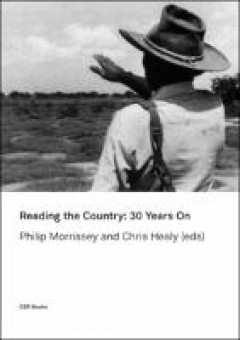
Reading the country: 30 years on
Philip Morrissey and Chris Healy (eds).
- Edition
- -
- ISBN/ISSN
- 9780648124283
- Collation
- 1 online resource (284 pages)
- Series Title
- CSR books
- Call Number
- -

Studies in Australian political rhetoric
This edited collection includes eleven major case studies and one general review of rhetorical contest in Australian politics. The volume showcases the variety of methods available for studying political speech, including historical, theoretical, institutional, and linguistic analyses, and demonstrates the centrality of language use to democratic politics. The chapters reveal errors in rhetoric…
- Edition
- -
- ISBN/ISSN
- 9781925021868
- Collation
- -
- Series Title
- -
- Call Number
- 320.014 STU s

Coastal Themes: An Archaeology of the Southern Curtis Coast, Queensland
Archeology; Aboriginal australians; Antiquities; Queensland; Australia
- Edition
- -
- ISBN/ISSN
- 9781920942960
- Collation
- XXVII, 314 p.
- Series Title
- -
- Call Number
- 994.01 ULM c
 Computer Science, Information & General Works
  Philosophy & Psychology
  Religion
  Social Sciences
  Language
  Pure Science
  Applied Sciences
  Art & Recreation
  Literature
  History & Geography