Filter by
# Debug Box
/var/www/htdocs/pustaka-digital/lib/SearchEngine/SearchBiblioEngine.php:688 "Search Engine Debug 🔎 🪲"
Engine Type ⚙️: "SLiMS\SearchEngine\SearchBiblioEngine"
SQL ⚙️: array:2 [
  "count" => "select count(sb.biblio_id) from search_biblio as sb where sb.opac_hide=0 and ((match (sb.topic) against (:subject in boolean mode)))"
  "query" => "select sb.biblio_id, sb.title, sb.author, sb.topic, sb.image, sb.isbn_issn, sb.publisher, sb.publish_place, sb.publish_year, sb.labels, sb.input_date, sb.edition, sb.collation, sb.series_title, sb.call_number from search_biblio as sb where sb.opac_hide=0 and ((match (sb.topic) against (:subject in boolean mode))) order by sb.last_update desc limit 10 offset 60"
]
Bind Value ⚒️: array:1 [
  ":subject" => "'+\"Culture\"'"
]
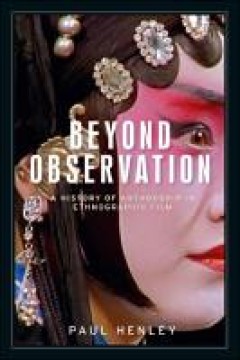
Beyond observation : a history of authorship in ethnographic film
This book analyses the authoring of ethnographic films between 1895 and 2015. It is based on the general argument that the ethnographicness of a film should not be gauged according to whether it is about an exotic culture, but rather by the degree to which it conforms to the norms of ethnographic practice more generally. On these grounds, it considers films made in a broad range of styles, on a…
- Edition
- -
- ISBN/ISSN
- 9781526147295
- Collation
- xviii, 525 p. : bnw, ill.
- Series Title
- -
- Call Number
- 301 HEN b

Decolonising the Human : Reflections from Africa on difference and oppression
"Decolonising the Human examines the ongoing project of constituting ‘the human’ in light of the durability of coloniality and the persistence of multiple oppressions. The ‘human’ emerges as a deeply political category, historically constructed as a scarce existential resource. Once weaponised, it allows for the social, political and economic elevation of those who are centred within it…
- Edition
- -
- ISBN/ISSN
- 9781776146529
- Collation
- 264p. ; ill.
- Series Title
- -
- Call Number
- 306.0967 MEL d
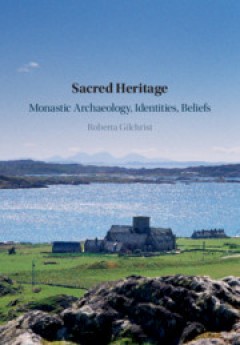
Sacred heritage : monastic archaeology, identities, beliefs
Roberta Gilchrist critically evaluates the concept of sacred heritage. Drawing on global perspectives from heritage studies, archaeology, museology, anthropology and architectural history, she examines the multiple values of medieval Christian heritage. Gilchrist investigates monastic archaeology through the lens of the material study of religion and reveals the sensory experience of religion t…
- Edition
- -
- ISBN/ISSN
- 9781108678087
- Collation
- xvii, 276 p. ; ill
- Series Title
- -
- Call Number
- 274.103 GIL s

The routledge handbook of museums, media and communication
Museums today find themselves within a mediatised society, where everyday life is conducted in a data-full and technology-rich context. In fact, museums are themselves mediatised: they present a uniquely media-centred environment, in which communicative media is a constitutive property of their organisation and of the visitor experience. The Routledge Handbook of Museums, Media and Communicatio…
- Edition
- -
- ISBN/ISSN
- 9781317197447
- Collation
- xviii, 339p. : ill.
- Series Title
- -
- Call Number
- 069 SCH t
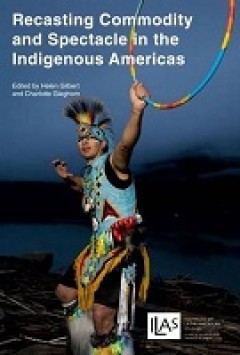
Recasting commodity and spectacle in the indigenous Americas
Indigenous artists frequently voice concerns over the commodification of their cultures, a process acutely felt by those living with the consequences of colonialism. This timely book, which features colour illustrations throughout, examines the ways in which contemporary indigenous peoples in different parts of the Americas have harnessed performance practices to resist imposed stereotypes and …
- Edition
- -
- ISBN/ISSN
- 9781908857088
- Collation
- ix, 273p.
- Series Title
- -
- Call Number
- 700.98 REC g

Cultural revolutions : reason versus culture in philosophy, politics, and jihad
Cultural Revolutions argues that reason itself is cultural, but no less reasonable for it. Lawrence Cahoone systematically defines culture and gauges the consequences of the ineradicably cultural nature of cognition and action, yet argues that none of this implies relativism. Cahoone offers a definition of culture as teleologically organized practices, artifacts, and narratives and analyzes the…
- Edition
- -
- ISBN/ISSN
- 9780271030241
- Collation
- 231p.
- Series Title
- -
- Call Number
- 306.09 CUL c
Policy controversies and political blame games
In modern, policy-heavy democracies, blame games about policy controversies are commonplace. Despite their ubiquity, blame games are notoriously difficult to study. This book elevates them to the place they deserve in the study of politics and public policy. Blame games are microcosms of conflictual politics that yield unique insights into democracies under pressure. Based on an original framew…
- Edition
- -
- ISBN/ISSN
- 9781108860116
- Collation
- xiv, 264 p. ; ill
- Series Title
- -
- Call Number
- 306.2091821 HIN p

The history manifesto
How should historians speak truth to power – and why does it matter? Why is five hundred years better than five months or five years as a planning horizon? And why is history – especially long-term history – so essential to understanding the multiple pasts which gave rise to our conflicted present? The History Manifesto is a call to arms to historians and everyone interested in the role o…
- Edition
- -
- ISBN/ISSN
- 9781139923880
- Collation
- ix, 165 p. : ill
- Series Title
- -
- Call Number
- 901 GUL t
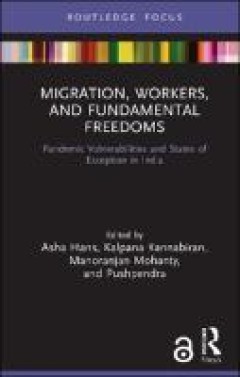
Migration, workers, and fundamental freedoms : pandemic vulnerabilities and s…
The COVID-19 pandemic resulted in a mass exodus of India’s migrant workers from the cities back to the villages. This book explores the social conditions and concerns around health, labour, migration, and gender that were thrown up as a result of this forced migration. The book examines the failings of the public health systems and the state response to address the humanitarian crisis which u…
- Edition
- -
- ISBN/ISSN
- 9781003145509
- Collation
- ix, 127 p. : ill.
- Series Title
- -
- Call Number
- 331.5440954 HAN m
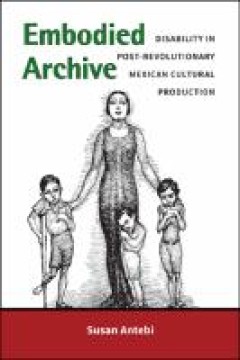
Embodied archive: disability in post-revolutionary Mexican cultural production
"Embodied Archive focuses on perceptions of disability and racial difference in Mexico’s early post-revolutionary period, from the 1920s to the 1940s. In this period, Mexican state-sponsored institutions charged with the education and health of the population sought to strengthen and improve the future of the nation, and to forge a more racially homogeneous sense of collective identity and hi…
- Edition
- -
- ISBN/ISSN
- 9780472902422
- Collation
- 283 p.: ill.
- Series Title
- Corporealities: Discourses Of Disability
- Call Number
- 305.908097209041 ANT e
 Computer Science, Information & General Works
  Philosophy & Psychology
  Religion
  Social Sciences
  Language
  Pure Science
  Applied Sciences
  Art & Recreation
  Literature
  History & Geography