Filter by
Found 1 from your keywords: subject="Academic Freedom"
# Debug Box
/var/www/htdocs/pustaka-digital/lib/SearchEngine/SearchBiblioEngine.php:688 "Search Engine Debug 🔎 🪲"
Engine Type ⚙️: "SLiMS\SearchEngine\SearchBiblioEngine"
SQL ⚙️: array:2 [
  "count" => "select count(sb.biblio_id) from search_biblio as sb where sb.opac_hide=0 and ((match (sb.topic) against (:subject in boolean mode)))"
  "query" => "select sb.biblio_id, sb.title, sb.author, sb.topic, sb.image, sb.isbn_issn, sb.publisher, sb.publish_place, sb.publish_year, sb.labels, sb.input_date, sb.edition, sb.collation, sb.series_title, sb.call_number from search_biblio as sb where sb.opac_hide=0 and ((match (sb.topic) against (:subject in boolean mode))) order by sb.last_update desc limit 10 offset 0"
]
Bind Value ⚒️: array:1 [
  ":subject" => "'+\"Academic Freedom\"'"
]
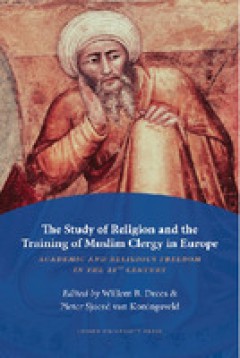
The Study of Religion and the Training of Muslim Clergy in Europe
Religious scholarship can be offensive to believers, as conflicts from the time of Galileo and Spinoza to the recent critique of Danish religious scholars in the wake of the infamous Muhammad cartoons have shown. Studies of this type of scholarship have been appropriated by believers as a means of reinventing their own identities - as the training of twentieth-century Muslim clergy demonstrates…
- Edition
- -
- ISBN/ISSN
- 9789087280253
- Collation
- 503p
- Series Title
- -
- Call Number
- 200.71 DRE s
 Computer Science, Information & General Works
  Philosophy & Psychology
  Religion
  Social Sciences
  Language
  Pure Science
  Applied Sciences
  Art & Recreation
  Literature
  History & Geography