Filter by
Found 1 from your keywords: subject="Acting techniques"
# Debug Box
/var/www/htdocs/pustaka-digital/lib/SearchEngine/SearchBiblioEngine.php:688 "Search Engine Debug 🔎 🪲"
Engine Type ⚙️: "SLiMS\SearchEngine\SearchBiblioEngine"
SQL ⚙️: array:2 [
  "count" => "select count(sb.biblio_id) from search_biblio as sb where sb.opac_hide=0 and ((match (sb.topic) against (:subject in boolean mode)))"
  "query" => "select sb.biblio_id, sb.title, sb.author, sb.topic, sb.image, sb.isbn_issn, sb.publisher, sb.publish_place, sb.publish_year, sb.labels, sb.input_date, sb.edition, sb.collation, sb.series_title, sb.call_number from search_biblio as sb where sb.opac_hide=0 and ((match (sb.topic) against (:subject in boolean mode))) order by sb.last_update desc limit 10 offset 0"
]
Bind Value ⚒️: array:1 [
  ":subject" => "'+\"Acting techniques\"'"
]
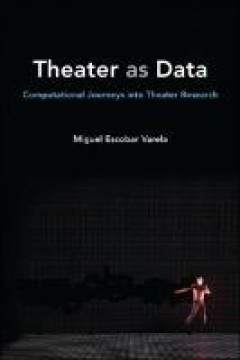
Theater as data : computational journeys into theater research
In Theater as Data, Miguel Escobar Varela explores the use of computational methods and digital data in theater research. He considers the implications of these new approaches, and explains the roles that statistics and visualizations play. Reflecting on recent debates in the humanities, the author suggests that there are two ways of using data, both of which have a place in theater research. D…
- Edition
- -
- ISBN/ISSN
- 9780472128631
- Collation
- VIII, 222 p.
- Series Title
- -
- Call Number
- 792.028 ESC t
 Computer Science, Information & General Works
  Philosophy & Psychology
  Religion
  Social Sciences
  Language
  Pure Science
  Applied Sciences
  Art & Recreation
  Literature
  History & Geography