Filter by
# Debug Box
/var/www/htdocs/pustaka-digital/lib/SearchEngine/SearchBiblioEngine.php:688 "Search Engine Debug 🔎 🪲"
Engine Type ⚙️: "SLiMS\SearchEngine\SearchBiblioEngine"
SQL ⚙️: array:2 [
  "count" => "select count(sb.biblio_id) from search_biblio as sb where sb.opac_hide=0 and ((match (sb.topic) against (:subject in boolean mode)))"
  "query" => "select sb.biblio_id, sb.title, sb.author, sb.topic, sb.image, sb.isbn_issn, sb.publisher, sb.publish_place, sb.publish_year, sb.labels, sb.input_date, sb.edition, sb.collation, sb.series_title, sb.call_number from search_biblio as sb where sb.opac_hide=0 and ((match (sb.topic) against (:subject in boolean mode))) order by sb.last_update desc limit 10 offset 0"
]
Bind Value ⚒️: array:1 [
  ":subject" => "'+\"Archaelogy\"'"
]
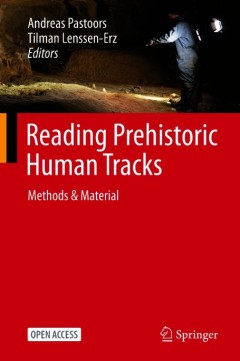
Reading Prehistoric Human Tracks : Methods & Material
This Open Access book explains that after long periods of prehistoric research in which the importance of the archaeological as well as the natural context of rock art has been constantly underestimated, research has now begun to take this context into focus for documentation, analysis, interpretation and understanding. Human footprints are prominent among the long-time under-researched feature…
- Edition
- -
- ISBN/ISSN
- 9783030604066
- Collation
- xiii, 436 p.
- Series Title
- -
- Call Number
- 569.9 REA A

How Things Make History: The Roman Empire and its terra sigillata Pottery
Bright red terra sigillata pots dating to the first three centuries CE can be found throughout the Western Roman provinces. The pots' widespread distribution and recognisability make them key evidence in the effort to reconstruct the Roman Empire's economy and society. Drawing on recent ideas in material culture, this book asks a radically new question: what was it about the pots themselves tha…
- Edition
- -
- ISBN/ISSN
- 9789048529933
- Collation
- x, 173p.: ill.
- Series Title
- -
- Call Number
- 938 OYE h
 Computer Science, Information & General Works
  Philosophy & Psychology
  Religion
  Social Sciences
  Language
  Pure Science
  Applied Sciences
  Art & Recreation
  Literature
  History & Geography