Filter by
# Debug Box
/var/www/htdocs/pustaka-digital/lib/SearchEngine/SearchBiblioEngine.php:688 "Search Engine Debug 🔎 🪲"
Engine Type ⚙️: "SLiMS\SearchEngine\SearchBiblioEngine"
SQL ⚙️: array:2 [
  "count" => "select count(sb.biblio_id) from search_biblio as sb where sb.opac_hide=0 and ((match (sb.topic) against (:subject in boolean mode)))"
  "query" => "select sb.biblio_id, sb.title, sb.author, sb.topic, sb.image, sb.isbn_issn, sb.publisher, sb.publish_place, sb.publish_year, sb.labels, sb.input_date, sb.edition, sb.collation, sb.series_title, sb.call_number from search_biblio as sb where sb.opac_hide=0 and ((match (sb.topic) against (:subject in boolean mode))) order by sb.last_update desc limit 10 offset 0"
]
Bind Value ⚒️: array:1 [
  ":subject" => "'+\"Archaeologists\"'"
]
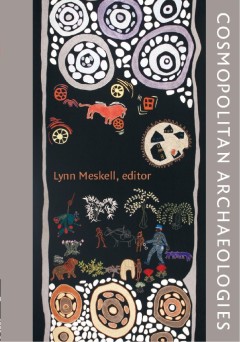
Cosmopolitan archaeologies
This book delves into the politics of contemporary archaeology in an increasingly complex international environment. Describing various forms of cosmopolitan engagement, the contributors explore the implications of applying the cosmopolitan ideals of obligation to others and respect for cultural difference to archaeological practice, showing that those ethics increasingly demand the rethinking …
- Edition
- -
- ISBN/ISSN
- 9780822344322
- Collation
- 296p. : ill.
- Series Title
- -
- Call Number
- 930.1 COS c

Scholars, travellers, and trade : the pioneer years of the National Museum of…
Today, the National Museum of Antiquities in Leiden is internationally known for its outstanding archaeological collections. Yet its origins lie in an insignificant assortment of artefacts used for study by Leiden University. How did this transformation come about? Ruurd Halbertsma has delved into the archives to show that the appointment of Caspar Reuvens as Professor of Archaeology in 1818 wa…
- Edition
- -
- ISBN/ISSN
- 9780203634547
- Collation
- xiv, 182p. : ill.
- Series Title
- -
- Call Number
- 069.09492 HAL s
 Computer Science, Information & General Works
  Philosophy & Psychology
  Religion
  Social Sciences
  Language
  Pure Science
  Applied Sciences
  Art & Recreation
  Literature
  History & Geography