Filter by
# Debug Box
/var/www/htdocs/pustaka-digital/lib/SearchEngine/SearchBiblioEngine.php:688 "Search Engine Debug 🔎 🪲"
Engine Type ⚙️: "SLiMS\SearchEngine\SearchBiblioEngine"
SQL ⚙️: array:2 [
  "count" => "select count(sb.biblio_id) from search_biblio as sb where sb.opac_hide=0 and ((match (sb.topic) against (:subject in boolean mode)))"
  "query" => "select sb.biblio_id, sb.title, sb.author, sb.topic, sb.image, sb.isbn_issn, sb.publisher, sb.publish_place, sb.publish_year, sb.labels, sb.input_date, sb.edition, sb.collation, sb.series_title, sb.call_number from search_biblio as sb where sb.opac_hide=0 and ((match (sb.topic) against (:subject in boolean mode))) order by sb.last_update desc limit 10 offset 0"
]
Bind Value ⚒️: array:1 [
  ":subject" => "'+\"Aristotle\"'"
]
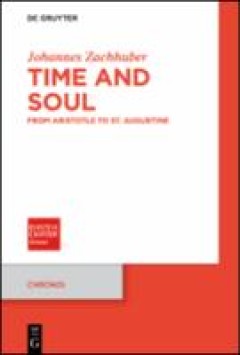
Time And Soul
In Book IV of his Physics, Aristotle asked whether time could exist without a soul that counts it. As a result, philosophers throughout antiquity tackled the problem of subjective time and its relation to the physical time of the cosmos. The present book gives an account of this debate. It analyses the contributions made by Aristotle and his Peripatetic followers but also discusses Neoplatonist…
- Edition
- -
- ISBN/ISSN
- 9783110692723
- Collation
- -
- Series Title
- -
- Call Number
- -

Perception in Aristotle’s Ethics
Rabinoff strives to account for ethical perception (aisthesis) in Aristotle’s ethics—to give it a place of importance in ethical choice and action—and to offer an account of the faculty of perception expansive enough to include reception of the ethical significance of particulars. The book is motivated by particular features of Aristotle’s thought and by increasing philosophical awarene…
- Edition
- -
- ISBN/ISSN
- 9780810136434
- Collation
- IX, 196 p.
- Series Title
- Rereading Ancient Philosophy
- Call Number
- 171.3 RAB p
 Computer Science, Information & General Works
  Philosophy & Psychology
  Religion
  Social Sciences
  Language
  Pure Science
  Applied Sciences
  Art & Recreation
  Literature
  History & Geography