Filter by
# Debug Box
/var/www/htdocs/pustaka-digital/lib/SearchEngine/SearchBiblioEngine.php:688 "Search Engine Debug 🔎 🪲"
Engine Type ⚙️: "SLiMS\SearchEngine\SearchBiblioEngine"
SQL ⚙️: array:2 [
  "count" => "select count(sb.biblio_id) from search_biblio as sb where sb.opac_hide=0 and ((match (sb.topic) against (:subject in boolean mode)))"
  "query" => "select sb.biblio_id, sb.title, sb.author, sb.topic, sb.image, sb.isbn_issn, sb.publisher, sb.publish_place, sb.publish_year, sb.labels, sb.input_date, sb.edition, sb.collation, sb.series_title, sb.call_number from search_biblio as sb where sb.opac_hide=0 and ((match (sb.topic) against (:subject in boolean mode))) order by sb.last_update desc limit 10 offset 0"
]
Bind Value ⚒️: array:1 [
  ":subject" => "'+\"Atrocities\"'"
]
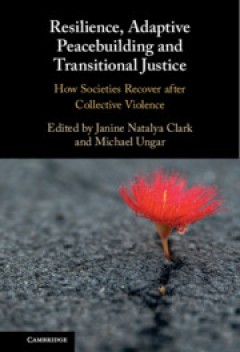
Resilience, Adaptive Peacebuilding and Transitional Justice How Societies Re…
Processes of post-war reconstruction, peacebuilding and reconciliation are partly about fostering stability and adaptive capacity across different social systems. Nevertheless, these processes have seldom been expressly discussed within a resilience framework. Similarly, although the goals of transitional justice – among them (re)establishing the rule of law, delivering justice and aiding rec…
- Edition
- -
- ISBN/ISSN
- 9781108919500
- Collation
- xvii, 310 p ; ill
- Series Title
- -
- Call Number
- 155.232 RES J

Sacred men : law, torture, and retribution in Guam
Between 1944 and 1949 the United States Navy held a war crimes tribunal that tried Japanese nationals and members of Guam's indigenous Chamorro population who had worked for Japan's military government. In Sacred Men Keith L. Camacho traces the tribunal's legacy and its role in shaping contemporary domestic and international laws regarding combatants, jurisdiction, and property. Drawing on Gior…
- Edition
- edision 12
- ISBN/ISSN
- 9781478005667
- Collation
- vii. :312 p.
- Series Title
- -
- Call Number
- 341.690268. SAC k
 Computer Science, Information & General Works
  Philosophy & Psychology
  Religion
  Social Sciences
  Language
  Pure Science
  Applied Sciences
  Art & Recreation
  Literature
  History & Geography