Filter by
# Debug Box
/var/www/htdocs/pustaka-digital/lib/SearchEngine/SearchBiblioEngine.php:688 "Search Engine Debug 🔎 🪲"
Engine Type ⚙️: "SLiMS\SearchEngine\SearchBiblioEngine"
SQL ⚙️: array:2 [
  "count" => "select count(sb.biblio_id) from search_biblio as sb where sb.opac_hide=0 and ((match (sb.topic) against (:subject in boolean mode)))"
  "query" => "select sb.biblio_id, sb.title, sb.author, sb.topic, sb.image, sb.isbn_issn, sb.publisher, sb.publish_place, sb.publish_year, sb.labels, sb.input_date, sb.edition, sb.collation, sb.series_title, sb.call_number from search_biblio as sb where sb.opac_hide=0 and ((match (sb.topic) against (:subject in boolean mode))) order by sb.last_update desc limit 10 offset 0"
]
Bind Value ⚒️: array:1 [
  ":subject" => "'+\"Augmented reality\"'"
]
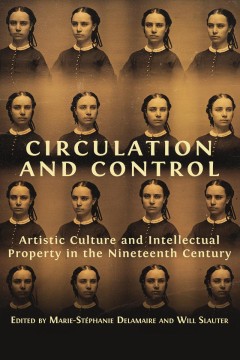
Circulation and control : artistic culture and intellectual property in the n…
The nineteenth century witnessed a series of revolutions in the production and circulation of images. From lithographs and engraved reproductions of paintings to daguerreotypes, stereoscopic views, and mass-produced sculptures, works of visual art became available in a wider range of media than ever before. But the circulation and reproduction of artworks also raised new questions about the leg…
- Edition
- -
- ISBN/ISSN
- 9781800641488
- Collation
- xiv, 288p.: ill.
- Series Title
- -
- Call Number
- 346 DEL c
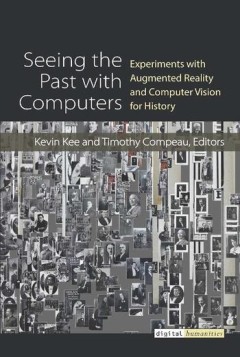
Seeing the past with computers : experiments with augmented reality and compu…
Recent developments in computer technology are providing historians with new ways to see—and seek to hear, touch, or smell—traces of the past. Place-based augmented reality applications are an increasingly common feature at heritage sites and museums, allowing historians to create immersive, multifaceted learning experiences. Now that computer vision can be directed at the past, research …
- Edition
- -
- ISBN/ISSN
- 9780472131112
- Collation
- vi, 247p. : ill.
- Series Title
- -
- Call Number
- 001.30285 SEE s
 Computer Science, Information & General Works
  Philosophy & Psychology
  Religion
  Social Sciences
  Language
  Pure Science
  Applied Sciences
  Art & Recreation
  Literature
  History & Geography