Filter by
Found 1 from your keywords: subject="Communication Studie"
# Debug Box
/var/www/htdocs/pustaka-digital/lib/SearchEngine/SearchBiblioEngine.php:688 "Search Engine Debug 🔎 🪲"
Engine Type ⚙️: "SLiMS\SearchEngine\SearchBiblioEngine"
SQL ⚙️: array:2 [
  "count" => "select count(sb.biblio_id) from search_biblio as sb where sb.opac_hide=0 and ((match (sb.topic) against (:subject in boolean mode)))"
  "query" => "select sb.biblio_id, sb.title, sb.author, sb.topic, sb.image, sb.isbn_issn, sb.publisher, sb.publish_place, sb.publish_year, sb.labels, sb.input_date, sb.edition, sb.collation, sb.series_title, sb.call_number from search_biblio as sb where sb.opac_hide=0 and ((match (sb.topic) against (:subject in boolean mode))) order by sb.last_update desc limit 10 offset 0"
]
Bind Value ⚒️: array:1 [
  ":subject" => "'+\"Communication Studie\"'"
]
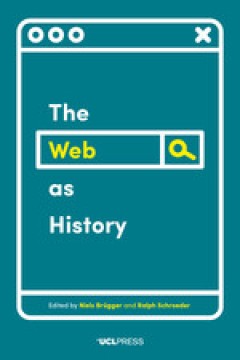
The Web as history: using web archives to understand the past and the present
This article puts on the agenda one of the fundamental theoretical questions within the emerging field of website history: how can the object of historical study — the website — be delimited? Its focus is on the 'website' artefact as a medium and a text. After elaborating a definition of the website, as well as discussing how the website is distinct from other possible analytical web object…
- Edition
- -
- ISBN/ISSN
- 9781911307563
- Collation
- 296 p.; 22 cm.
- Series Title
- -
- Call Number
- 310 BRU w
 Computer Science, Information & General Works
  Philosophy & Psychology
  Religion
  Social Sciences
  Language
  Pure Science
  Applied Sciences
  Art & Recreation
  Literature
  History & Geography