Filter by
# Debug Box
/var/www/htdocs/pustaka-digital/lib/SearchEngine/SearchBiblioEngine.php:688 "Search Engine Debug 🔎 🪲"
Engine Type ⚙️: "SLiMS\SearchEngine\SearchBiblioEngine"
SQL ⚙️: array:2 [
  "count" => "select count(sb.biblio_id) from search_biblio as sb where sb.opac_hide=0 and ((match (sb.topic) against (:subject in boolean mode)))"
  "query" => "select sb.biblio_id, sb.title, sb.author, sb.topic, sb.image, sb.isbn_issn, sb.publisher, sb.publish_place, sb.publish_year, sb.labels, sb.input_date, sb.edition, sb.collation, sb.series_title, sb.call_number from search_biblio as sb where sb.opac_hide=0 and ((match (sb.topic) against (:subject in boolean mode))) order by sb.last_update desc limit 10 offset 0"
]
Bind Value ⚒️: array:1 [
  ":subject" => "'+\"Computer games--Social aspects\"'"
]
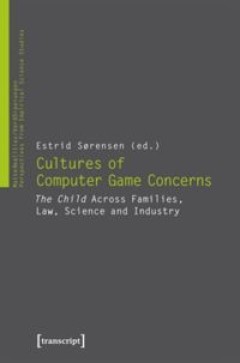
Cultures of computer game concerns : the child across families, law, science …
The same computer games are played by youths all over the world, and worldwide games become matters of concern in relation to children: worries rise about addiction, violence, education, time, and economy. Yet, these concerns vary depending upon where they are situated: in families, legal contexts, industry or science. They also play out differently across countries and cultures. This situated …
- Edition
- -
- ISBN/ISSN
- 9783839439340
- Collation
- III, 355 p.
- Series Title
- VerKörperungen/MatteRealities - Perspektiven empirischer Wissenschaftsforschung, 23
- Call Number
- 794.8 CUL c
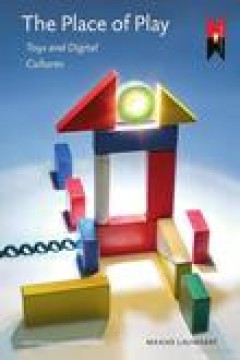
The place of play : toys and digital cultures
Increasingly, technology is at stake in toys, games and playing. With the immense popularity of computer games, questions concerning the role and function of technology in play have become more pressing. A key aspect of the increasing technologization and digitalization of both toys and play is the vagueness of borders between producers, consumers and players. In these so-called participatory c…
- Edition
- -
- ISBN/ISSN
- 9789089640802
- Collation
- 159 p.
- Series Title
- MediaMatters
- Call Number
- 794.8 LAU p
 Computer Science, Information & General Works
  Philosophy & Psychology
  Religion
  Social Sciences
  Language
  Pure Science
  Applied Sciences
  Art & Recreation
  Literature
  History & Geography