Filter by
Found 1 from your keywords: subject="Computers--Social asp...
# Debug Box
/var/www/htdocs/pustaka-digital/lib/SearchEngine/SearchBiblioEngine.php:688 "Search Engine Debug 🔎 🪲"
Engine Type ⚙️: "SLiMS\SearchEngine\SearchBiblioEngine"
SQL ⚙️: array:2 [
  "count" => "select count(sb.biblio_id) from search_biblio as sb where sb.opac_hide=0 and ((match (sb.topic) against (:subject in boolean mode)))"
  "query" => "select sb.biblio_id, sb.title, sb.author, sb.topic, sb.image, sb.isbn_issn, sb.publisher, sb.publish_place, sb.publish_year, sb.labels, sb.input_date, sb.edition, sb.collation, sb.series_title, sb.call_number from search_biblio as sb where sb.opac_hide=0 and ((match (sb.topic) against (:subject in boolean mode))) order by sb.last_update desc limit 10 offset 0"
]
Bind Value ⚒️: array:1 [
  ":subject" => "'+\"Computers--Social aspects\"'"
]
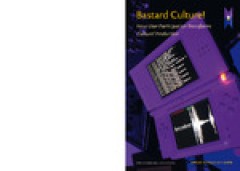
Bastard culture! User participation and the extension of cultural industries
New online technologies have brought with them a great promise of freedom. The computer and particularly the Internet have been represented as enabling technologies, turning consumers into users and users into producers. Furthermore, lay people and amateurs have been enthusiastically greeted as heroes of the digital era. This thoughtful study casts a fresh light on the shaping of user participa…
- Edition
- -
- ISBN/ISSN
- 9789089642561
- Collation
- 250 p.
- Series Title
- MediaMatters, 6
- Call Number
- 303.4833 SCH b
 Computer Science, Information & General Works
  Philosophy & Psychology
  Religion
  Social Sciences
  Language
  Pure Science
  Applied Sciences
  Art & Recreation
  Literature
  History & Geography