Filter by
Found 1 from your keywords: subject="Digital Culture"
# Debug Box
/var/www/htdocs/pustaka-digital/lib/SearchEngine/SearchBiblioEngine.php:688 "Search Engine Debug 🔎 🪲"
Engine Type ⚙️: "SLiMS\SearchEngine\SearchBiblioEngine"
SQL ⚙️: array:2 [
  "count" => "select count(sb.biblio_id) from search_biblio as sb where sb.opac_hide=0 and ((match (sb.topic) against (:subject in boolean mode)))"
  "query" => "select sb.biblio_id, sb.title, sb.author, sb.topic, sb.image, sb.isbn_issn, sb.publisher, sb.publish_place, sb.publish_year, sb.labels, sb.input_date, sb.edition, sb.collation, sb.series_title, sb.call_number from search_biblio as sb where sb.opac_hide=0 and ((match (sb.topic) against (:subject in boolean mode))) order by sb.last_update desc limit 10 offset 0"
]
Bind Value ⚒️: array:1 [
  ":subject" => "'+\"Digital Culture\"'"
]
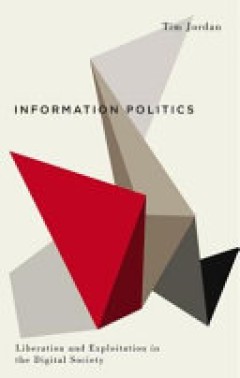
Information politics : liberation and exploitation in the digital society
Conflict over information has become a central part of modern politics and culture. The sites of struggle are numerous, the actors beyond count. Currents of liberation and exploitation course through the debates about Edward Snowden and surveillance, Anonymous, search engines and social media. In Information Politics, Tim Jordan identifies all these issues in relation to a general understanding…
- Edition
- 24
- ISBN/ISSN
- 9781783712977
- Collation
- viii, 230 p
- Series Title
- -
- Call Number
- 306.4 JOR i
 Computer Science, Information & General Works
  Philosophy & Psychology
  Religion
  Social Sciences
  Language
  Pure Science
  Applied Sciences
  Art & Recreation
  Literature
  History & Geography