Filter by
Found 1 from your keywords: subject="Dokument"
# Debug Box
/var/www/htdocs/pustaka-digital/lib/SearchEngine/SearchBiblioEngine.php:688 "Search Engine Debug 🔎 🪲"
Engine Type ⚙️: "SLiMS\SearchEngine\SearchBiblioEngine"
SQL ⚙️: array:2 [
  "count" => "select count(sb.biblio_id) from search_biblio as sb where sb.opac_hide=0 and ((match (sb.topic) against (:subject in boolean mode)))"
  "query" => "select sb.biblio_id, sb.title, sb.author, sb.topic, sb.image, sb.isbn_issn, sb.publisher, sb.publish_place, sb.publish_year, sb.labels, sb.input_date, sb.edition, sb.collation, sb.series_title, sb.call_number from search_biblio as sb where sb.opac_hide=0 and ((match (sb.topic) against (:subject in boolean mode))) order by sb.last_update desc limit 10 offset 0"
]
Bind Value ⚒️: array:1 [
  ":subject" => "'+\"Dokument\"'"
]
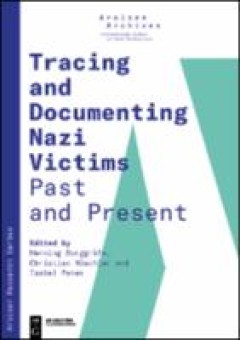
Tracing and documenting Nazi Victims past and present
After World War II, tracing and documenting Nazi victims emerged against the background of millions of missing persons and early compensation proceedings. This was a process in which the Allies, international aid organizations, and survivors themselves took part. New archives, documentation centers and tracing bureaus were founded amid the increasing Cold War divide. They gathered documents on …
- Edition
- -
- ISBN/ISSN
- 9783110665376
- Collation
- VIII, 342 p.
- Series Title
- -
- Call Number
- 025 TRA t
 Computer Science, Information & General Works
  Philosophy & Psychology
  Religion
  Social Sciences
  Language
  Pure Science
  Applied Sciences
  Art & Recreation
  Literature
  History & Geography