Filter by
# Debug Box
/var/www/htdocs/pustaka-digital/lib/SearchEngine/SearchBiblioEngine.php:688 "Search Engine Debug 🔎 🪲"
Engine Type ⚙️: "SLiMS\SearchEngine\SearchBiblioEngine"
SQL ⚙️: array:2 [
  "count" => "select count(sb.biblio_id) from search_biblio as sb where sb.opac_hide=0 and ((match (sb.topic) against (:subject in boolean mode)))"
  "query" => "select sb.biblio_id, sb.title, sb.author, sb.topic, sb.image, sb.isbn_issn, sb.publisher, sb.publish_place, sb.publish_year, sb.labels, sb.input_date, sb.edition, sb.collation, sb.series_title, sb.call_number from search_biblio as sb where sb.opac_hide=0 and ((match (sb.topic) against (:subject in boolean mode))) order by sb.last_update desc limit 10 offset 0"
]
Bind Value ⚒️: array:1 [
  ":subject" => "'+\"Grammar, syntax & morphology\"'"
]

Handbook of easy languages in Europe
The Handbook of Easy Languages in Europe describes what Easy Language is and how it is used in European countries. It demonstrates the great diversity of actors, instruments and outcomes related to Easy Language throughout Europe. All people, despite their limitations, have an equal right to information, inclusion, and social participation. This results in requirements for understandable langua…
- Edition
- -
- ISBN/ISSN
- 9783732991952
- Collation
- 623 p.
- Series Title
- -
- Call Number
- 400 LIN h
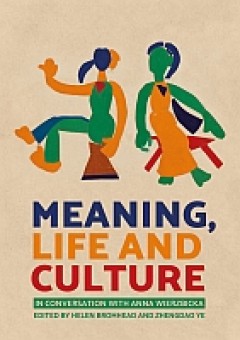
Meaning, life and culture : in conversation with Anna Wierzbicka
This book is dedicated to Anna Wierzbicka, one of the most influential and innovative linguists of her generation. Her work spans a number of disciplines, including anthropology, cultural psychology, cognitive science, philosophy and religious studies, as well as her home base of linguistics. She is best known for the Natural Semantic Metalanguage (NSM) approach to meaning—a versatile tool fo…
- Edition
- -
- ISBN/ISSN
- 9781760463939
- Collation
- XVIII, 515 p.
- Series Title
- -
- Call Number
- 801.4 MEA m

Easy Language – plain language – easy language plus : balancing comprehen…
This book shows how accessible communication, and especially easy-to-understand languages, should be designed in order to become instruments of inclusion. It examines two well-established easy-to-understand varieties: Easy Language and Plain Language, and shows that they have complementary profiles with respect to four central qualities: comprehensibility, perceptibility, acceptability and stig…
- Edition
- Vol. 3
- ISBN/ISSN
- 9783732992997
- Collation
- 301 p.
- Series Title
- Easy – Plain – Accessible, 3
- Call Number
- 428.2 MAA e
 Computer Science, Information & General Works
  Philosophy & Psychology
  Religion
  Social Sciences
  Language
  Pure Science
  Applied Sciences
  Art & Recreation
  Literature
  History & Geography