Filter by
# Debug Box
/var/www/htdocs/pustaka-digital/lib/SearchEngine/SearchBiblioEngine.php:688 "Search Engine Debug 🔎 🪲"
Engine Type ⚙️: "SLiMS\SearchEngine\SearchBiblioEngine"
SQL ⚙️: array:2 [
  "count" => "select count(sb.biblio_id) from search_biblio as sb where sb.opac_hide=0 and ((match (sb.topic) against (:subject in boolean mode)))"
  "query" => "select sb.biblio_id, sb.title, sb.author, sb.topic, sb.image, sb.isbn_issn, sb.publisher, sb.publish_place, sb.publish_year, sb.labels, sb.input_date, sb.edition, sb.collation, sb.series_title, sb.call_number from search_biblio as sb where sb.opac_hide=0 and ((match (sb.topic) against (:subject in boolean mode))) order by sb.last_update desc limit 10 offset 0"
]
Bind Value ⚒️: array:1 [
  ":subject" => "'+\"Historical fiction, English\"'"
]
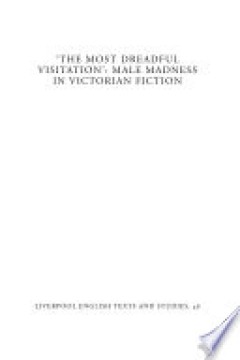
The most dreadful visitation : male madness in Victorian fiction
Victorian literature is rife with scenes of madness, with mental disorder functioning as everything from a simple plot device to a commentary on the foundations of Victorian society. But while madness in Victorian fiction has been much studied, most scholarship has focused on the portrayal of madness in women; male mental disorder in the period has suffered comparative neglect. In ‘The Most D…
- Edition
- -
- ISBN/ISSN
- 9781846314186
- Collation
- 192 p
- Series Title
- -
- Call Number
- 823.8093561 VAL m

Middlemarch: epigraphs and mirrors
In Middlemarch, George Eliot draws a character passionately absorbed by abstruse allusion and obscure epigraphs. Casaubon’s obsession is a cautionary tale, but Adam Roberts nonetheless sees in him an invitation to take Eliot’s use of epigraphy and allusion seriously, and this book is an attempt to do just that. Roberts considers the epigraph as a mirror that refracts the meaning of a tex…
- Edition
- -
- ISBN/ISSN
- 9781800641600
- Collation
- 149 p. : ill. ; 24 cm
- Series Title
- -
- Call Number
- 823.8 ROB m

History and cultural memory in neo-Victorian fiction: Victorian afterimages
History and Cultural Memory in Neo-Victorian Fiction combines innovative literary and historiographical analysis to investigate the way neo-Victorian novels conceptualise our relationship to the Victorian past, and to analyse their role in the production and communication of historical knowledge. Positioning neo-Victorian novels as dynamic participants in the contemporary historical imaginary, …
- Edition
- -
- ISBN/ISSN
- 978023022858
- Collation
- ix, 222 p. ; 23 cm.
- Series Title
- -
- Call Number
- 823.809358 MIT h
 Computer Science, Information & General Works
  Philosophy & Psychology
  Religion
  Social Sciences
  Language
  Pure Science
  Applied Sciences
  Art & Recreation
  Literature
  History & Geography