Filter by
# Debug Box
/var/www/htdocs/pustaka-digital/lib/SearchEngine/SearchBiblioEngine.php:688 "Search Engine Debug 🔎 🪲"
Engine Type ⚙️: "SLiMS\SearchEngine\SearchBiblioEngine"
SQL ⚙️: array:2 [
  "count" => "select count(sb.biblio_id) from search_biblio as sb where sb.opac_hide=0 and ((match (sb.topic) against (:subject in boolean mode)))"
  "query" => "select sb.biblio_id, sb.title, sb.author, sb.topic, sb.image, sb.isbn_issn, sb.publisher, sb.publish_place, sb.publish_year, sb.labels, sb.input_date, sb.edition, sb.collation, sb.series_title, sb.call_number from search_biblio as sb where sb.opac_hide=0 and ((match (sb.topic) against (:subject in boolean mode))) order by sb.last_update desc limit 10 offset 0"
]
Bind Value ⚒️: array:1 [
  ":subject" => "'+\"Intermediality\"'"
]

Dissonant records: close listening to literary archives
How archives obscure recorded media—and the case in favor of discovering them.\r\n\r\nSilence is not absence. It may be perceived as meaningless, or it may not be perceived at all, but it takes up space. In Dissonant Records, Tanya Clement makes the case for spoken word audio recordings within the archives. She explains why we tend to not use these audio recordings in research, what silences …
- Edition
- -
- ISBN/ISSN
- 9780262379229
- Collation
- xvi, 224 pages 23 cm.
- Series Title
- Media origins
- Call Number
- 929.1072 CLE d
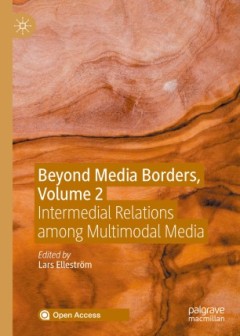
Beyond media borders, volume 2 : intermedial relations among multimodal media
This open access book promotes the idea that all media types are multimodal and that comparing media types, through an intermedial lens, necessarily involves analysing these multimodal traits. The collection includes a series of interconnected articles that illustrate and clarify how the concepts developed in Elleström’s influential article The Modalities of Media: A Model for Understanding …
- Edition
- -
- ISBN/ISSN
- 9783030496838
- Collation
- xxx, 242p. : ill.
- Series Title
- -
- Call Number
- 302.23 BEY b
 Computer Science, Information & General Works
  Philosophy & Psychology
  Religion
  Social Sciences
  Language
  Pure Science
  Applied Sciences
  Art & Recreation
  Literature
  History & Geography