Filter by
Found 1 from your keywords: subject="Iraq--Zākhū"
# Debug Box
/var/www/htdocs/pustaka-digital/lib/SearchEngine/SearchBiblioEngine.php:688 "Search Engine Debug 🔎 🪲"
Engine Type ⚙️: "SLiMS\SearchEngine\SearchBiblioEngine"
SQL ⚙️: array:2 [
  "count" => "select count(sb.biblio_id) from search_biblio as sb where sb.opac_hide=0 and ((match (sb.topic) against (:subject in boolean mode)))"
  "query" => "select sb.biblio_id, sb.title, sb.author, sb.topic, sb.image, sb.isbn_issn, sb.publisher, sb.publish_place, sb.publish_year, sb.labels, sb.input_date, sb.edition, sb.collation, sb.series_title, sb.call_number from search_biblio as sb where sb.opac_hide=0 and ((match (sb.topic) against (:subject in boolean mode))) order by sb.last_update desc limit 10 offset 0"
]
Bind Value ⚒️: array:1 [
  ":subject" => "'+\"Iraq--Zākhū\"'"
]
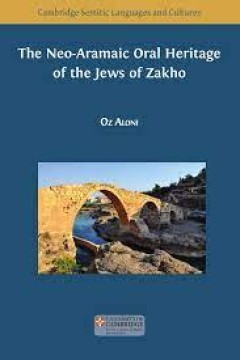
The Neo-Aramaic Oral Heritage of the Jews of Zakho
In 1951, the secluded Neo-Aramaic-speaking Jewish community of Zakho migrated collectively to Israel. It carried with it its unique language, culture and customs, many of which bore resemblance to those found in classical rabbinic literature. Like others in Kurdistan, for example, the Jews of Zakho retained a vibrant tradition of creating and performing songs based on embellishing biblical stor…
- Edition
- -
- ISBN/ISSN
- 9781800643048
- Collation
- xiii, 349 p. ; 15.6 cm.
- Series Title
- -
- Call Number
- 290 ALO t
 Computer Science, Information & General Works
  Philosophy & Psychology
  Religion
  Social Sciences
  Language
  Pure Science
  Applied Sciences
  Art & Recreation
  Literature
  History & Geography