Filter by
Found 1 from your keywords: subject="Law--English influenc...
# Debug Box
/var/www/htdocs/pustaka-digital/lib/SearchEngine/SearchBiblioEngine.php:688 "Search Engine Debug 🔎 🪲"
Engine Type ⚙️: "SLiMS\SearchEngine\SearchBiblioEngine"
SQL ⚙️: array:2 [
  "count" => "select count(sb.biblio_id) from search_biblio as sb where sb.opac_hide=0 and ((match (sb.topic) against (:subject in boolean mode)))"
  "query" => "select sb.biblio_id, sb.title, sb.author, sb.topic, sb.image, sb.isbn_issn, sb.publisher, sb.publish_place, sb.publish_year, sb.labels, sb.input_date, sb.edition, sb.collation, sb.series_title, sb.call_number from search_biblio as sb where sb.opac_hide=0 and ((match (sb.topic) against (:subject in boolean mode))) order by sb.last_update desc limit 10 offset 0"
]
Bind Value ⚒️: array:1 [
  ":subject" => "'+\"Law--English influences\"'"
]
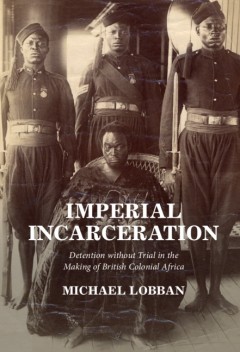
Imperial incarceration : detention without trial in the making of British col…
For nineteenth-century Britons, the rule of law stood at the heart of their constitutional culture, and guaranteed the right not to be imprisoned without trial. At the same time, in an expanding empire, the authorities made frequent resort to detention without trial to remove political leaders who stood in the way of imperial expansion. Such conduct raised difficult questions about Britain's …
- Edition
- -
- ISBN/ISSN
- 9781009004848
- Collation
- xii, 450p.
- Series Title
- Studies in legal history
- Call Number
- 345.960231 LOB i
 Computer Science, Information & General Works
  Philosophy & Psychology
  Religion
  Social Sciences
  Language
  Pure Science
  Applied Sciences
  Art & Recreation
  Literature
  History & Geography