Filter by
Found 1 from your keywords: subject="Law--Methodology—Au...
# Debug Box
/var/www/htdocs/pustaka-digital/lib/SearchEngine/SearchBiblioEngine.php:688 "Search Engine Debug 🔎 🪲"
Engine Type ⚙️: "SLiMS\SearchEngine\SearchBiblioEngine"
SQL ⚙️: array:2 [
  "count" => "select count(sb.biblio_id) from search_biblio as sb where sb.opac_hide=0 and ((match (sb.topic) against (:subject in boolean mode)))"
  "query" => "select sb.biblio_id, sb.title, sb.author, sb.topic, sb.image, sb.isbn_issn, sb.publisher, sb.publish_place, sb.publish_year, sb.labels, sb.input_date, sb.edition, sb.collation, sb.series_title, sb.call_number from search_biblio as sb where sb.opac_hide=0 and ((match (sb.topic) against (:subject in boolean mode))) order by sb.last_update desc limit 10 offset 0"
]
Bind Value ⚒️: array:1 [
  ":subject" => "'+\"Law--Methodology—Automation\"'"
]
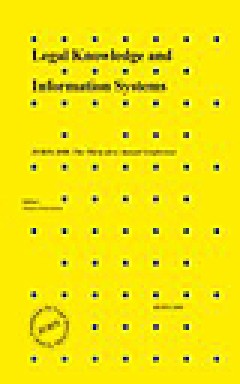
Legal knowledge and information systems : JURIX 2018: The Thirty-first Annual…
Artificial intelligence as applied to the legal domain has gained momentum thanks to the large, annotated corporate legal and case-law collections, human chats, and social media information now available in open data. Often represented in XML or other Semantic Web technologies, these now make it possible to use the AI theory developed by the JURIX community in over thirty years of research.…
- Edition
- -
- ISBN/ISSN
- 9781614999355
- Collation
- xi, 227 p.; 22 cm.
- Series Title
- Frontiers in Artificial Intelligence and Applications, Vol. 313
- Call Number
- 340.1 LEG l
 Computer Science, Information & General Works
  Philosophy & Psychology
  Religion
  Social Sciences
  Language
  Pure Science
  Applied Sciences
  Art & Recreation
  Literature
  History & Geography