Filter by
Found 1 from your keywords: subject="Mimika"
# Debug Box
/var/www/htdocs/pustaka-digital/lib/SearchEngine/SearchBiblioEngine.php:688 "Search Engine Debug 🔎 🪲"
Engine Type ⚙️: "SLiMS\SearchEngine\SearchBiblioEngine"
SQL ⚙️: array:2 [
  "count" => "select count(sb.biblio_id) from search_biblio as sb where sb.opac_hide=0 and ((match (sb.topic) against (:subject in boolean mode)))"
  "query" => "select sb.biblio_id, sb.title, sb.author, sb.topic, sb.image, sb.isbn_issn, sb.publisher, sb.publish_place, sb.publish_year, sb.labels, sb.input_date, sb.edition, sb.collation, sb.series_title, sb.call_number from search_biblio as sb where sb.opac_hide=0 and ((match (sb.topic) against (:subject in boolean mode))) order by sb.last_update desc limit 10 offset 0"
]
Bind Value ⚒️: array:1 [
  ":subject" => "'+\"Mimika\"'"
]
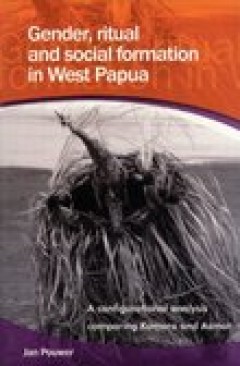
Gender, ritual and social formation in West Papua : A configurational analysi…
This study, based on a lifelong involvement with New Guinea, compares the culture of the Kamoro (18,000 people) with that of their eastern neighbours, the Asmat (40,000), both living on the south coast of West Papua, Indonesia. The comparison, showing substantial differences as well as striking similarities, contributes to a deeper understanding of both cultures. Part I looks at Kamoro society …
- Edition
- -
- ISBN/ISSN
- 9789067183253
- Collation
- xii, 300 p.
- Series Title
- Verhandelingen van het Koninklijk Instituut voor Taal-, Land- en Volkenkunde
- Call Number
- 953.0049912 POU g
 Computer Science, Information & General Works
  Philosophy & Psychology
  Religion
  Social Sciences
  Language
  Pure Science
  Applied Sciences
  Art & Recreation
  Literature
  History & Geography