Filter by
# Debug Box
/var/www/htdocs/pustaka-digital/lib/SearchEngine/SearchBiblioEngine.php:688 "Search Engine Debug 🔎 🪲"
Engine Type ⚙️: "SLiMS\SearchEngine\SearchBiblioEngine"
SQL ⚙️: array:2 [
  "count" => "select count(sb.biblio_id) from search_biblio as sb where sb.opac_hide=0 and ((match (sb.topic) against (:subject in boolean mode)))"
  "query" => "select sb.biblio_id, sb.title, sb.author, sb.topic, sb.image, sb.isbn_issn, sb.publisher, sb.publish_place, sb.publish_year, sb.labels, sb.input_date, sb.edition, sb.collation, sb.series_title, sb.call_number from search_biblio as sb where sb.opac_hide=0 and ((match (sb.topic) against (:subject in boolean mode))) order by sb.last_update desc limit 10 offset 0"
]
Bind Value ⚒️: array:1 [
  ":subject" => "'+\"National characteristics, Roman\"'"
]

Rome: An Empire of Many Nations New Perspectives on Ethnic Diversity and Cul…
The center of gravity in Roman studies has shifted far from the upper echelons of government and administration in Rome or the Emperor's court to the provinces and the individual. The multi-disciplinary studies presented in this volume reflect the turn in Roman history to the identities of ethnic groups and even single individuals who lived in Rome's vast multinational empire. The purpose is le…
- Edition
- -
- ISBN/ISSN
- 9781009256193
- Collation
- xii, 428 p ; ill
- Series Title
- -
- Call Number
- 937.06 ROM J
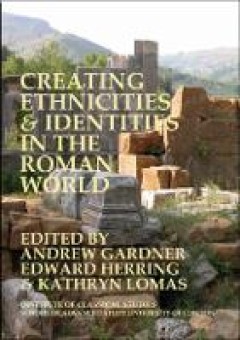
Creating ethnicities & identities in the Roman world
Questions of ethnic and cultural identities are central to the contemporary understanding of the Roman world. The expansion of Rome across Italy, the Mediterranean, and beyond entailed encounters with a wide range of peoples. Many of these had well-established pre-conquest ethnic identities which can be compared with Roman perceptions of them. In other cases, the ethnicity of peoples conquered …
- Edition
- -
- ISBN/ISSN
- 9781905670796
- Collation
- XIII, 278 p.
- Series Title
- BICS Supplements, 120
- Call Number
- 305.800937 CRE c
 Computer Science, Information & General Works
  Philosophy & Psychology
  Religion
  Social Sciences
  Language
  Pure Science
  Applied Sciences
  Art & Recreation
  Literature
  History & Geography