Filter by
Found 2 from your keywords: subject="Open educational reso...
# Debug Box
/var/www/htdocs/pustaka-digital/lib/SearchEngine/SearchBiblioEngine.php:688 "Search Engine Debug 🔎 🪲"
Engine Type ⚙️: "SLiMS\SearchEngine\SearchBiblioEngine"
SQL ⚙️: array:2 [
  "count" => "select count(sb.biblio_id) from search_biblio as sb where sb.opac_hide=0 and ((match (sb.topic) against (:subject in boolean mode)))"
  "query" => "select sb.biblio_id, sb.title, sb.author, sb.topic, sb.image, sb.isbn_issn, sb.publisher, sb.publish_place, sb.publish_year, sb.labels, sb.input_date, sb.edition, sb.collation, sb.series_title, sb.call_number from search_biblio as sb where sb.opac_hide=0 and ((match (sb.topic) against (:subject in boolean mode))) order by sb.last_update desc limit 10 offset 0"
]
Bind Value ⚒️: array:1 [
  ":subject" => "'+\"Open educational resources\"'"
]

Open Educational Resources: Policy, Costs and Transformation
The Open Educational Resources (OER) movement has grown substantially since the term was first adopted at UNESCO’s 2002 Forum on the Impact of Open Courseware for Higher Education in Developing Countries (UNESCO, 2002). Since then, there has been a significant increase in the development, use and sharing of OER as more and more governments and institutions come to realise their value. OER can…
- Edition
- -
- ISBN/ISSN
- -
- Collation
- xv, 231p : ill.
- Series Title
- -
- Call Number
- 681.14 OPE
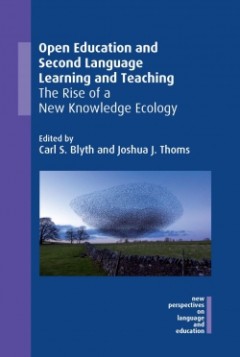
Open education and second language learning and teaching : the rise of a new …
This book is open access under a CC BY ND licence. This book contextualizes open education in foreign language (FL) learning and teaching; fills a gap in the research by exploring aspects of open second language learning and teaching across a range of educational contexts; and illustrates new ways of creating freely shared FL materials.
- Edition
- -
- ISBN/ISSN
- 9781800411005
- Collation
- XI, 271 p.
- Series Title
- -
- Call Number
- 418.0071 OPE o
 Computer Science, Information & General Works
  Philosophy & Psychology
  Religion
  Social Sciences
  Language
  Pure Science
  Applied Sciences
  Art & Recreation
  Literature
  History & Geography