Filter by
# Debug Box
/var/www/htdocs/pustaka-digital/lib/SearchEngine/SearchBiblioEngine.php:688 "Search Engine Debug 🔎 🪲"
Engine Type ⚙️: "SLiMS\SearchEngine\SearchBiblioEngine"
SQL ⚙️: array:2 [
  "count" => "select count(sb.biblio_id) from search_biblio as sb where sb.opac_hide=0 and ((match (sb.topic) against (:subject in boolean mode)))"
  "query" => "select sb.biblio_id, sb.title, sb.author, sb.topic, sb.image, sb.isbn_issn, sb.publisher, sb.publish_place, sb.publish_year, sb.labels, sb.input_date, sb.edition, sb.collation, sb.series_title, sb.call_number from search_biblio as sb where sb.opac_hide=0 and ((match (sb.topic) against (:subject in boolean mode))) order by sb.last_update desc limit 10 offset 0"
]
Bind Value ⚒️: array:1 [
  ":subject" => "'+\"Palestinian Arabs--Ethnic identity\"'"
]
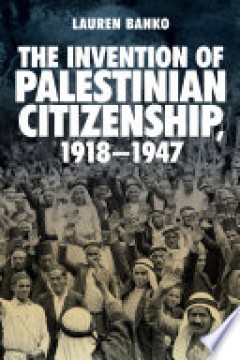
The Invention of Palestinian Citizenship
Explores the colonial, social and political history of the creation of citizenship in mandate Palestine In the two decades after the First World War, nationality and citizenship in Palestine became less like abstract concepts for the Arab population and more like meaningful statuses integrated into political, social and civil life and as markers of civic identity in a changing society. This boo…
- Edition
- -
- ISBN/ISSN
- 9781474415514
- Collation
- Knowladge Unlatched (KU)
- Series Title
- -
- Call Number
- 323.6095694 LAU t

Established and outsiders at the same time : self-images and we-images of Pal…
Palestinians frequently present a harmonizing and homogenizing we-image of their own national we-group, as a way of counteracting Israeli attempts to sow divisions among them, whether through Israeli politics or through the dominant public discourse in Israel. However, a closer look reveals the fragility of this homogenizing we-image which masks a variety of internal tensions and conflicts. By …
- Edition
- 11
- ISBN/ISSN
- 9783863952860
- Collation
- 232 p, ill.
- Series Title
- -
- Call Number
- 305.8927405694 ROS e
 Computer Science, Information & General Works
  Philosophy & Psychology
  Religion
  Social Sciences
  Language
  Pure Science
  Applied Sciences
  Art & Recreation
  Literature
  History & Geography