Filter by
# Debug Box
/var/www/htdocs/pustaka-digital/lib/SearchEngine/SearchBiblioEngine.php:688 "Search Engine Debug 🔎 🪲"
Engine Type ⚙️: "SLiMS\SearchEngine\SearchBiblioEngine"
SQL ⚙️: array:2 [
  "count" => "select count(sb.biblio_id) from search_biblio as sb where sb.opac_hide=0 and ((match (sb.topic) against (:subject in boolean mode)))"
  "query" => "select sb.biblio_id, sb.title, sb.author, sb.topic, sb.image, sb.isbn_issn, sb.publisher, sb.publish_place, sb.publish_year, sb.labels, sb.input_date, sb.edition, sb.collation, sb.series_title, sb.call_number from search_biblio as sb where sb.opac_hide=0 and ((match (sb.topic) against (:subject in boolean mode))) order by sb.last_update desc limit 10 offset 0"
]
Bind Value ⚒️: array:1 [
  ":subject" => "'+\"Piracy\"'"
]

A world of water: Rain, rivers and seas in Southeast Asian histories
Water, in its many guises, has always played a powerful role in shaping Southeast Asian histories, cultures, societies and economies. This volume, the rewritten results of an international workshop, with participants from eight countries, contains thirteen essays, representing a broad range of approaches to the study of Southeast Asia with water as the central theme. As it was exposed to the se…
- Edition
- -
- ISBN/ISSN
- 9789004254015
- Collation
- vii, 368
- Series Title
- -
- Call Number
- 304.20959
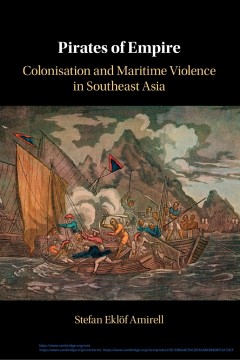
Pirates of empire : colonisation and maritime violence in Southeast Asia
The suppression of piracy and other forms of maritime violence was a keystone in the colonisation of Southeast Asia. Focusing on what was seen in the nineteenth century as the three most pirate-infested areas in the region - the Sulu Sea, the Strait of Malacca and Indochina - this comparative study in colonial history explores how piracy was defined, contested and used to resist or justify colo…
- Edition
- -
- ISBN/ISSN
- 9781108594516
- Collation
- ix, 266p. : ill.
- Series Title
- -
- Call Number
- 364.164 AMI p
 Computer Science, Information & General Works
  Philosophy & Psychology
  Religion
  Social Sciences
  Language
  Pure Science
  Applied Sciences
  Art & Recreation
  Literature
  History & Geography