Filter by
# Debug Box
/var/www/htdocs/pustaka-digital/lib/SearchEngine/SearchBiblioEngine.php:688 "Search Engine Debug 🔎 🪲"
Engine Type ⚙️: "SLiMS\SearchEngine\SearchBiblioEngine"
SQL ⚙️: array:2 [
  "count" => "select count(sb.biblio_id) from search_biblio as sb where sb.opac_hide=0 and ((match (sb.topic) against (:subject in boolean mode)))"
  "query" => "select sb.biblio_id, sb.title, sb.author, sb.topic, sb.image, sb.isbn_issn, sb.publisher, sb.publish_place, sb.publish_year, sb.labels, sb.input_date, sb.edition, sb.collation, sb.series_title, sb.call_number from search_biblio as sb where sb.opac_hide=0 and ((match (sb.topic) against (:subject in boolean mode))) order by sb.last_update desc limit 10 offset 0"
]
Bind Value ⚒️: array:1 [
  ":subject" => "'+\"Renaissance history\"'"
]
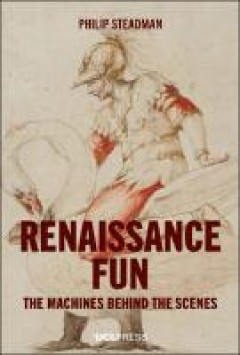
Renaissance fun
Renaissance Fun is about the technology of Renaissance entertainments in stage machinery and theatrical special effects; in gardens and fountains; and in the automata and self-playing musical instruments that were installed in garden grottoes. How did the machines behind these shows work? How exactly were chariots filled with singers let down onto the stage? How were flaming dragons made to fly…
- Edition
- 12
- ISBN/ISSN
- 9781787359154
- Collation
- -
- Series Title
- -
- Call Number
- 792.02509031 REN

Medieval Hackers
Medieval Hackers calls attention to the use of certain vocabulary terms in the Middle Ages and today: commonness, openness, and freedom. Today we associate this language with computer hackers, some of whom believe that information, from literature to the code that makes up computer programs, should be much more accessible to the general public than it is. In the medieval past these same terms w…
- Edition
- -
- ISBN/ISSN
- 9780692352465
- Collation
- ScholarLed
- Series Title
- -
- Call Number
- -

Gallucci's commentary on Dürer’s 'four books on human proportion': renaiss…
In 1591, Giovanni Paolo Gallucci published his Della simmetria dei corpi humani, an Italian translation of Albrecht Dürer’s Four Books on Human Proportion. While Dürer’s treatise had been translated earlier in the sixteenth-century into French and Latin, it was Gallucci’s Italian translation that endured in popularity as the most cited version of the text in later Baroque treatises, cov…
- Edition
- -
- ISBN/ISSN
- 9781783748891
- Collation
- xiii, 208 p. : ill. : ind. ; 24cm
- Series Title
- -
- Call Number
- 704.942 HUT g
 Computer Science, Information & General Works
  Philosophy & Psychology
  Religion
  Social Sciences
  Language
  Pure Science
  Applied Sciences
  Art & Recreation
  Literature
  History & Geography