Filter by
Found 1 from your keywords: subject="Rezeption"
# Debug Box
/var/www/htdocs/pustaka-digital/lib/SearchEngine/SearchBiblioEngine.php:688 "Search Engine Debug 🔎 🪲"
Engine Type ⚙️: "SLiMS\SearchEngine\SearchBiblioEngine"
SQL ⚙️: array:2 [
  "count" => "select count(sb.biblio_id) from search_biblio as sb where sb.opac_hide=0 and ((match (sb.topic) against (:subject in boolean mode)))"
  "query" => "select sb.biblio_id, sb.title, sb.author, sb.topic, sb.image, sb.isbn_issn, sb.publisher, sb.publish_place, sb.publish_year, sb.labels, sb.input_date, sb.edition, sb.collation, sb.series_title, sb.call_number from search_biblio as sb where sb.opac_hide=0 and ((match (sb.topic) against (:subject in boolean mode))) order by sb.last_update desc limit 10 offset 0"
]
Bind Value ⚒️: array:1 [
  ":subject" => "'+\"Rezeption\"'"
]
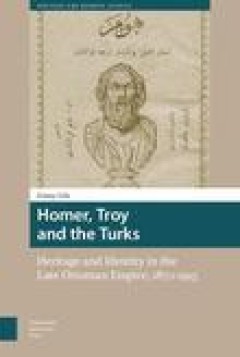
Homer, Troy and the Turks: heritage and identity in the Late Ottoman Empire 1…
Homer's stories of Troy are part of the foundations of Western culture. What's less well known is that they also inspired Ottoman-Turkish cultural traditions. Yet even with all the historical and archaeological research into Homer and Troy, most scholars today rely heavily on Western sources, giving Ottoman work in the field short shrift. This book helps right that balance, exploring Ottoman-Tu…
- Edition
- -
- ISBN/ISSN
- 9789462982697
- Collation
- 219 pages : illustrations ; 24 cm.
- Series Title
- Heritage and memory studies ; 4
- Call Number
- 949.6 USL h
 Computer Science, Information & General Works
  Philosophy & Psychology
  Religion
  Social Sciences
  Language
  Pure Science
  Applied Sciences
  Art & Recreation
  Literature
  History & Geography