Filter by
Found 1 from your keywords: subject="Speech Comprehension ...
# Debug Box
/var/www/htdocs/pustaka-digital/lib/SearchEngine/SearchBiblioEngine.php:688 "Search Engine Debug 🔎 🪲"
Engine Type ⚙️: "SLiMS\SearchEngine\SearchBiblioEngine"
SQL ⚙️: array:2 [
  "count" => "select count(sb.biblio_id) from search_biblio as sb where sb.opac_hide=0 and ((match (sb.topic) against (:subject in boolean mode)))"
  "query" => "select sb.biblio_id, sb.title, sb.author, sb.topic, sb.image, sb.isbn_issn, sb.publisher, sb.publish_place, sb.publish_year, sb.labels, sb.input_date, sb.edition, sb.collation, sb.series_title, sb.call_number from search_biblio as sb where sb.opac_hide=0 and ((match (sb.topic) against (:subject in boolean mode))) order by sb.last_update desc limit 10 offset 0"
]
Bind Value ⚒️: array:1 [
  ":subject" => "'+\"Speech Comprehension - Speech Production\"'"
]
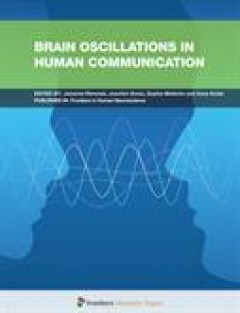
Brain oscillations in human communication
Brain oscillations, or neural rhythms, reflect widespread functional connections between large-scale neural networks, as well as within cortical networks. As such they have been related to many aspects of human behaviour. An increasing number of studies have demonstrated the role of brain oscillations at distinct frequency bands in cognitive, sensory and motor tasks. Consequentially, those rhyt…
- Edition
- -
- ISBN/ISSN
- 9782889454587
- Collation
- 189 p.; 22 cm
- Series Title
- Frontiers Research Topics
- Call Number
- 361.1 BRA b
 Computer Science, Information & General Works
  Philosophy & Psychology
  Religion
  Social Sciences
  Language
  Pure Science
  Applied Sciences
  Art & Recreation
  Literature
  History & Geography