Filter by
Found 1 from your keywords: subject="Theodor W. Adorno"
# Debug Box
/var/www/htdocs/pustaka-digital/lib/SearchEngine/SearchBiblioEngine.php:688 "Search Engine Debug 🔎 🪲"
Engine Type ⚙️: "SLiMS\SearchEngine\SearchBiblioEngine"
SQL ⚙️: array:2 [
  "count" => "select count(sb.biblio_id) from search_biblio as sb where sb.opac_hide=0 and ((match (sb.topic) against (:subject in boolean mode)))"
  "query" => "select sb.biblio_id, sb.title, sb.author, sb.topic, sb.image, sb.isbn_issn, sb.publisher, sb.publish_place, sb.publish_year, sb.labels, sb.input_date, sb.edition, sb.collation, sb.series_title, sb.call_number from search_biblio as sb where sb.opac_hide=0 and ((match (sb.topic) against (:subject in boolean mode))) order by sb.last_update desc limit 10 offset 0"
]
Bind Value ⚒️: array:1 [
  ":subject" => "'+\"Theodor W. Adorno\"'"
]
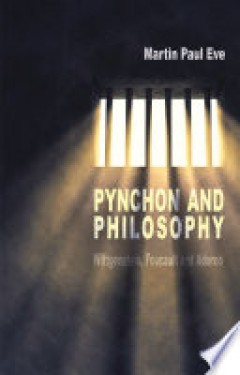
Pynchon and Philosophy: Wittgenstein, Foucault and Adorno
The writings of Thomas Pynchon have spawned more critical commentary than almost any other American author of the last fifty years. Pynchon’s texts are perhaps most famed for their ‘difficulty and apparent unfriendliness’, as works that require, as Inger H. Dalsgaard, Luc Herman and Brian McHale put it, ‘a collective enterprise of reading wherein none of us could succeed without the hel…
- Edition
- 1
- ISBN/ISSN
- 9781137405500
- Collation
- XIII, 229p
- Series Title
- -
- Call Number
- 813.5409 MAR
 Computer Science, Information & General Works
  Philosophy & Psychology
  Religion
  Social Sciences
  Language
  Pure Science
  Applied Sciences
  Art & Recreation
  Literature
  History & Geography