Filter by
# Debug Box
/var/www/htdocs/pustaka-digital/lib/SearchEngine/SearchBiblioEngine.php:688 "Search Engine Debug 🔎 🪲"
Engine Type ⚙️: "SLiMS\SearchEngine\SearchBiblioEngine"
SQL ⚙️: array:2 [
  "count" => "select count(sb.biblio_id) from search_biblio as sb where sb.opac_hide=0 and ((match (sb.topic) against (:subject in boolean mode)))"
  "query" => "select sb.biblio_id, sb.title, sb.author, sb.topic, sb.image, sb.isbn_issn, sb.publisher, sb.publish_place, sb.publish_year, sb.labels, sb.input_date, sb.edition, sb.collation, sb.series_title, sb.call_number from search_biblio as sb where sb.opac_hide=0 and ((match (sb.topic) against (:subject in boolean mode))) order by sb.last_update desc limit 10 offset 0"
]
Bind Value ⚒️: array:1 [
  ":subject" => "'+\"Twitter\"'"
]
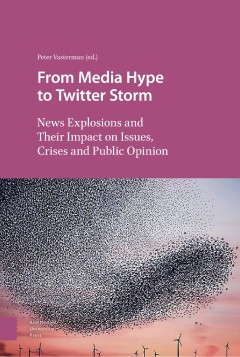
From media hype to Twitter storm : the dynamics of self reinforcing processes…
The word media hype is often used as rhetorical argument to dismiss waves of media attention as overblown, disproportional and exaggerated. But these explosive news waves, as well as - nowadays - the twitter storms, are object of scientific research, because they are an important phenomenon in the public area. Sometimes it is indeed ‘much ado about nothing’ but in many cases these media sto…
- Edition
- -
- ISBN/ISSN
- 9789048532100
- Collation
- 401p. : ill.
- Series Title
- -
- Call Number
- 070.4 FRO f

#Identity : hashtagging race, gender, sexuality, and nation
"Since its launch in 2006, Twitter has served as a major platform for political performance, social justice activism, and large-scale public debates over race, ethnicity, gender, sexuality, and nationality. It has empowered minoritarian groups to organize protests, articulate often-underrepresented perspectives, and form community. It has also spread hashtags that have been used to bully and …
- Edition
- -
- ISBN/ISSN
- 9780472074150
- Collation
- xi, 365p. : ill.
- Series Title
- -
- Call Number
- 302.30285 HAS h
 Computer Science, Information & General Works
  Philosophy & Psychology
  Religion
  Social Sciences
  Language
  Pure Science
  Applied Sciences
  Art & Recreation
  Literature
  History & Geography