Filter by
Found 2 from your keywords: subject="Victims of terrorism"
# Debug Box
/var/www/htdocs/pustaka-digital/lib/SearchEngine/SearchBiblioEngine.php:688 "Search Engine Debug 🔎 🪲"
Engine Type ⚙️: "SLiMS\SearchEngine\SearchBiblioEngine"
SQL ⚙️: array:2 [
  "count" => "select count(sb.biblio_id) from search_biblio as sb where sb.opac_hide=0 and ((match (sb.topic) against (:subject in boolean mode)))"
  "query" => "select sb.biblio_id, sb.title, sb.author, sb.topic, sb.image, sb.isbn_issn, sb.publisher, sb.publish_place, sb.publish_year, sb.labels, sb.input_date, sb.edition, sb.collation, sb.series_title, sb.call_number from search_biblio as sb where sb.opac_hide=0 and ((match (sb.topic) against (:subject in boolean mode))) order by sb.last_update desc limit 10 offset 0"
]
Bind Value ⚒️: array:1 [
  ":subject" => "'+\"Victims of terrorism\"'"
]

Victimhood and acknowledgement : the other side of terrorism
How does terrorism affect our picture of the history of terrorism then, if the victims are moved centre stage? If the focus is put on their suffering? The contributions to this edition of the European History Yearbook will examine such questions in a broad range of historical case studies and methods, including visual history.
- Edition
- -
- ISBN/ISSN
- 9783110581508
- Collation
- 172p. : ill
- Series Title
- -
- Call Number
- 362.88 VIC v
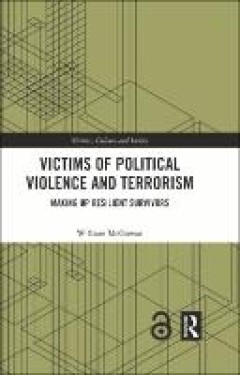
Victims of political violence and terrorism : making up resilient survivors
This book examines the survivors of political violence and terrorism, considering both how they have responded and how they have been responded to following critical incidents. As this work demonstrates, survivors of comparatively rare and spectacular violence hold a mirror up to society’s normative assumptions around trauma, recovery and resilience. Drawing on two years of observational fiel…
- Edition
- -
- ISBN/ISSN
- 9781003154020
- Collation
- xi, 274 p. : ill.
- Series Title
- -
- Call Number
- 362.889317 MCG v
 Computer Science, Information & General Works
  Philosophy & Psychology
  Religion
  Social Sciences
  Language
  Pure Science
  Applied Sciences
  Art & Recreation
  Literature
  History & Geography