Filter by
# Debug Box
/var/www/htdocs/pustaka-digital/lib/SearchEngine/SearchBiblioEngine.php:688 "Search Engine Debug 🔎 🪲"
Engine Type ⚙️: "SLiMS\SearchEngine\SearchBiblioEngine"
SQL ⚙️: array:2 [
  "count" => "select count(sb.biblio_id) from search_biblio as sb where sb.opac_hide=0 and ((match (sb.topic) against (:subject in boolean mode)))"
  "query" => "select sb.biblio_id, sb.title, sb.author, sb.topic, sb.image, sb.isbn_issn, sb.publisher, sb.publish_place, sb.publish_year, sb.labels, sb.input_date, sb.edition, sb.collation, sb.series_title, sb.call_number from search_biblio as sb where sb.opac_hide=0 and ((match (sb.topic) against (:subject in boolean mode))) order by sb.last_update desc limit 10 offset 0"
]
Bind Value ⚒️: array:1 [
  ":subject" => "'+\"Virtual reality in education\"'"
]
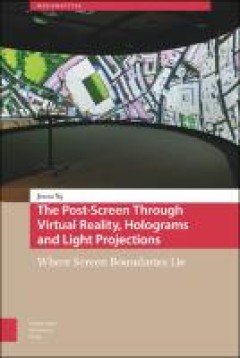
The post-screen through virtual reality, holograms and light projections
Screens are ubiquitous today. They display information; present image worlds; are portable; connect to mobile networks; mesmerize. However, contemporary screen media also seek to eliminate the presence of the screen and the visibilities of its boundaries. As what is image becomes increasingly indistinguishable against the viewer’s actual surroundings, this unsettling prompts re-examination ab…
- Edition
- -
- ISBN/ISSN
- 9789048552566
- Collation
- -
- Series Title
- -
- Call Number
- 302.2 JEN

Learning in virtual worlds : research and applications
Three-dimensional (3D) immersive virtual worlds have been touted as being capable of facilitating highly interactive, engaging, multimodal learning experiences. Much of the evidence gathered to support these claims has been anecdotal but the potential that these environments hold to solve traditional problems in online and technology-mediated education—primarily learner isolation and student …
- Edition
- -
- ISBN/ISSN
- 9781771991360
- Collation
- xxvii, 329p. : ill.
- Series Title
- -
- Call Number
- 371.33468 LEA l
 Computer Science, Information & General Works
  Philosophy & Psychology
  Religion
  Social Sciences
  Language
  Pure Science
  Applied Sciences
  Art & Recreation
  Literature
  History & Geography